Shyam Cookware Blog - Guides & Tips

Shyam Cookware Knowledge Hub

Cookware Guides, Maintenance Tips & Insights

Explore expert buying guides, pressure cooker safety tips, and cookware advice.

0%

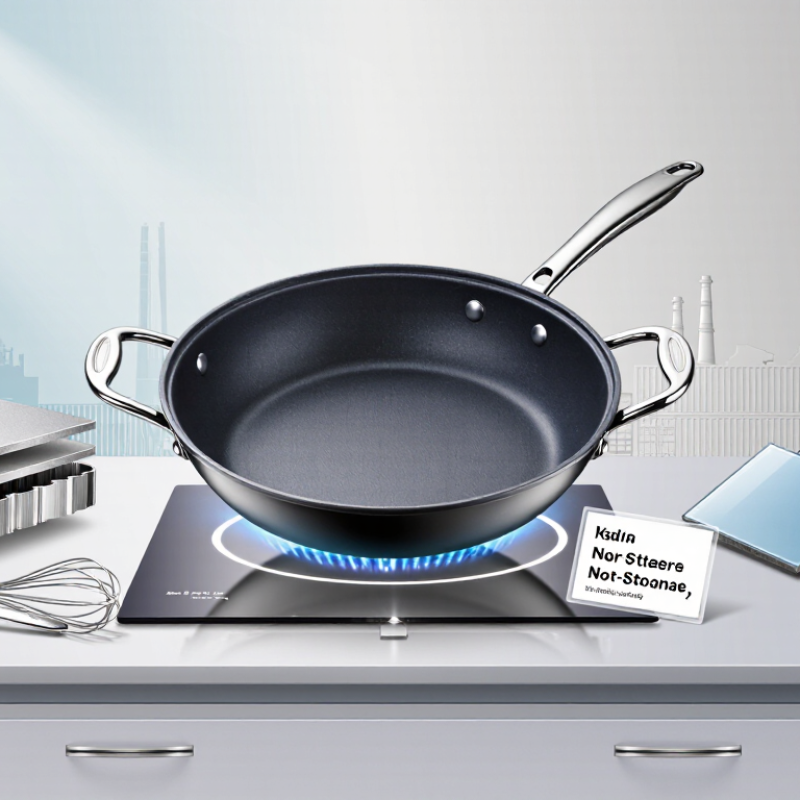
Global buyers are seeking reliable Non-Stick Kadhai suppliers as cookware demand expands across retail, hospitality, and online channels. A Non-Stick Kadhai combines Indian cooking traditions with modern convenience. Its rounded body supports stirring, frying, and preparing gravies with less sticking. Small details matter. The handle must stay cool. The coating must appear even. The base should sit flat on induction or gas stoves.

Industry data supports careful market attention. Grand View Research has reported steady growth in the global cookware market, supported by urban households, replacement purchases, and premium kitchen products. Fortune Business Insights has also identified consumer interest in durable, convenient, and aesthetically designed cookware. However, market estimates differ by research method and product definition. Buyers should treat headline figures as direction, not proof.

China remains an important manufacturing base for coated cookware, offering broad production capacity and flexible customization. Yet supplier selection requires more than comparing quotations. Global buyers should review coating specifications, aluminum or stainless-steel grades, thickness consistency, heat distribution, and production quality controls. Testing records should be current and traceable. Factory audits can reveal details that catalog photographs hide.

Look beyond the lowest price. A sample may perform well, while a mass batch varies. That risk deserves attention. Ask suppliers for food-contact compliance documents, coating test results, packaging specifications, and export experience for the destination market. The best China Non-Stick Kadhai suppliers combine consistent workmanship, transparent communication, dependable lead times, and responsive after-sales support. No shortlist is perfect. Still, a structured evaluation can reduce costly surprises and build a more reliable global sourcing program.
Best China Non-Stick Kadhai Suppliers for Global Buyers?

What Defines a Reliable China Non-Stick Kadhai Supplier

A reliable China non-stick kadhai supplier proves quality through repeatable processes, not attractive product photos.

During supplier checks, I look for clear material specifications, coating thickness records, and batch-level inspection reports. The supplier should explain the kadhai’s aluminum or steel grade without vague claims. Factory visits, video audits, and third-party inspections can reveal details that catalogs hide. Check them carefully.

Sampling is essential. Test the handle strength, lid fit, heat distribution, and coating performance after repeated washing. Ask for food-contact documentation and export testing relevant to your target market. A dependable supplier also provides traceability, stable lead times, clear packaging standards, and written responses to defects. Small details matter, such as carton drop-test results and barcode accuracy. Communication quality is a practical reliability signal.

Tips: Order samples from different production batches, not only one polished sample. Compare weight, surface finish, rivets, and base flatness. Ask how rejected units are controlled. Do not rely only on certificates; verify their scope and validity. I once overlooked packaging strength, and several units arrived with scratched surfaces. That mistake was costly. No supplier is perfect. Reliable partners respond openly, correct weak points, and document improvements instead of hiding them. Pricing still matters, but unusually low quotes may reflect thinner materials, weaker inspection, or unstable production.

Key Materials and Manufacturing Standards for Non-Stick Kadhais

For global buyers, a reliable non-stick kadhai starts with the right base metal. Many factories use cast or pressed aluminum for fast, even heating. Heavier aluminum usually resists warping better. Hard-anodized surfaces can improve durability, but they do not make the pan indestructible. Stainless steel may strengthen the exterior or induction plate. The design must match the target cooker and market.

The coating deserves close inspection. PTFE coatings need controlled spraying, curing, and thickness checks. Ceramic coatings require careful surface preparation and stable heat treatment. Ask suppliers for food-contact declarations, coating adhesion results, abrasion testing, and thermal-cycle records. PFOA-related statements should be clear and supported by current laboratory documents. A certificate without batch details is weak evidence.

Manufacturing standards also include handle strength, rim smoothness, base flatness, and lid fit. Inspect several units from different production batches. Do not judge quality from one polished sample. That mistake is common. Factories following documented quality systems, such as ISO 9001-based procedures, should record incoming material checks and final inspections. Buyers should request traceability, approved drawings, and corrective-action reports. Small defects still matter. A loose rivet or uneven coating can become a serious customer complaint. No coating lasts forever. Clear care instructions and realistic warranty terms improve reliability.

How to Evaluate China-Based Kadhai Suppliers

How to Evaluate China-Based Kadhai Suppliers

A reliable China-based Kadhai supplier should pass more than a catalog review. I request factory videos, business licenses, recent audit records, and production samples. The World Bank’s 2023 Logistics Performance Index ranked China 19th globally, with a score of 3.7 out of 5. Shipping is capable, but delays still happen. Confirm export experience, carton testing, and backup logistics before placing orders.

Material verification deserves close attention. Ask for stainless-steel or aluminum grade reports from an independent laboratory. Check coating thickness, handle attachment, base flatness, and heat distribution using the same sample model. ISO’s 2023 Survey reported more than 1.26 million ISO 9001 certificates worldwide. Certification helps, but it does not prove every batch is consistent. Request the certificate scope and verify its issuing body.

Pricing can hide practical risks. Compare thickness, packaging, tooling charges, inspection fees, and replacement terms line by line. A very low quotation may reflect thinner metal or weaker packaging. I would also order a small trial shipment and inspect scratches, loose handles, and lid fit after transit. My own evaluation would not rely on one successful sample. That is a weakness worth acknowledging. Factories can improve samples temporarily, so repeat inspections and written specifications remain essential.

Best China Non-Stick Kadhai Suppliers for Global Buyers? - How to Evaluate China-Based Kadhai Suppliers

Anonymous supplier benchmark for evaluating non-stick kadhai manufacturers in China

Evaluation Dimension Supplier Profile A Supplier Profile B Supplier Profile C Supplier Profile D Buyer Verification Focus
Primary Product Type Forged aluminum non-stick kadhai Pressed aluminum non-stick kadhai Stainless-steel body with aluminum core Cast aluminum non-stick kadhai Confirm body construction, forming process, and product drawings.
Common Diameter Range 20–36 cm 18–32 cm 20–36 cm 24–40 cm Match the diameter to the target market and cooking surface.
Base Thickness 3.0–4.0 mm 2.0–3.0 mm 2.5–3.5 mm 3.5–5.0 mm Measure samples with calibrated equipment; thicker does not always mean better heat distribution.
Interior Coating Structure 3-layer system 2-layer system 3-layer system 3-layer system Request coating specification, application process, curing temperature, and technical data sheet.
Stated Coating Thickness 25–35 μm 20–28 μm 25–35 μm 30–40 μm Verify thickness at multiple points, including the sidewall and cooking surface.
Compatible Cooktops Gas, electric, ceramic Gas, electric Gas, electric, ceramic, induction Gas, electric, ceramic For induction, verify magnetic base construction and induction heating test results.
Handle Options Bakelite or stainless steel Bakelite Stainless steel or detachable Bakelite or silicone-touch Check attachment strength, heat resistance, screw quality, and replacement availability.
Indicative MOQ per Design 500 units 1,000 units 300 units 800 units Confirm whether MOQ applies by size, color, coating type, or total order quantity.
Sample Lead Time 10–15 days 7–12 days 15–20 days 12–18 days Clarify whether the lead time includes tooling, coating, decoration, and sample approval.
Mass Production Lead Time 35–45 days 30–40 days 45–60 days 40–55 days Obtain a written production schedule and confirm peak-season capacity.
Food-Contact Documentation Available Partial Available Partial Request current laboratory reports for the exact coating, substrate, and finished product.
Quality Management Evidence ISO 9001 certificate and inspection records Internal inspection checklist ISO 9001 certificate and third-party audit Factory inspection records Verify certificate validity, scope, issuing body, and production-site address.
Pre-Shipment Inspection AQL-based inspection accepted Factory inspection only AQL-based inspection accepted Third-party inspection available Define acceptable quality limits for coating defects, warping, handle strength, and packaging.
Packaging Capability Color box and export carton Standard export carton Retail box, sleeve, and palletization Color box and protective foam Check carton drop-test performance, barcode accuracy, carton dimensions, and container loading plan.
Customization Support Logo, color, handle, packaging Logo and packaging Full tooling and product development Logo, color, and packaging Confirm tooling ownership, mold charges, engineering drawings, and approval procedures.
Indicative FOB Price for 28 cm Unit US$8.50–12.00 US$5.50–8.50 US$12.00–18.00 US$9.50–14.50 Compare equivalent materials, coating systems, packaging, tooling, inspection, and shipping terms.
Overall Evaluation Score 88/100 74/100 91/100 81/100 Use a weighted score based on compliance, quality, capacity, cost, lead time, and communication.
Recommended evaluation method: Approve a supplier only after reviewing product samples, coating and food-contact test reports, factory quality records, packaging samples, production capacity, and an independent pre-shipment inspection plan. Price ranges are indicative FOB benchmarks and should be reconfirmed against the final specification and order quantity.

Quality Control, Certifications, and Product Customization

When evaluating China non-stick kadhai suppliers, global buyers should examine quality systems beyond attractive samples. Experienced suppliers can provide material specifications, coating details, and batch traceability records. Ask how they control aluminum thickness, base flatness, handle strength, and coating adhesion. A practical factory visit may reveal more than a polished catalog. Look closely at storage conditions, worker procedures, and final inspection tables.

Food-contact safety needs documented evidence. Request current test reports from accredited laboratories, covering coating migration, heavy metals, and thermal performance. Certifications such as ISO 9001 may show process discipline, but they do not automatically prove product compliance. Requirements differ between countries and sales channels. Confirm testing against the destination market’s regulations before placing a large order. This step is often delayed. That can be costly.

Customization should be tested, not only discussed. Suppliers may adjust diameter, wall thickness, handle materials, lid design, packaging, and surface color. Send technical drawings with measurable tolerances. Approve a production sample before mass manufacturing. Check cooking performance, balance, heat distribution, and packaging durability through repeated trials. A sample may perform well while a later batch varies. Therefore, include inspection standards, acceptable defect limits, and corrective-action procedures in the purchase agreement. No inspection plan is perfect. Regular feedback and independent checks make the process more dependable.

Ordering, Pricing, Shipping, and Import Considerations for Global Buyers

Reliable China non-stick kadhai sourcing starts with a detailed purchase specification. Define diameter, capacity, base thickness, coating type, handle material, packaging, and logo requirements. Ask suppliers for production photos, coating test results, food-contact documents, and recent inspection records. The OECD notes that trade costs remain highly sensitive to border procedures and documentation quality. Small errors can become expensive.

Request prices under FOB and CIF terms. Compare the full landed cost, not only the factory quotation. Include tooling, inner cartons, export packing, ocean freight, insurance, customs duty, broker fees, and inland delivery.

Raw material prices can change during production, so confirm the quotation’s validity period. A 30-day price may not remain realistic. That estimate can fail.

Shipping plans deserve equal attention. The World Bank’s 2023 Logistics Performance Index assessed 139 economies and highlighted major differences in customs speed, infrastructure, and shipment reliability. Use a forwarder that can verify vessel schedules and port charges. Before dispatch, check the commercial invoice, packing list, bill of lading, certificate of origin, and applicable food-contact reports. Import rules differ by destination, especially for non-stick coatings and labeling. Pre-shipment inspection is useful, but it is not perfect. A sample may pass while bulk packing reveals scratches, loose handles, or incorrect carton markings. Keep written approval records and a practical claim procedure.

FAQS

What proves a non-stick kadhai supplier is reliable?

Reliable suppliers show repeatable processes, not only attractive product photos. They provide material specifications, coating records, and batch inspection reports. Factory videos or independent inspections can reveal hidden problems. Small details matter.

Which materials should buyers check?

Ask whether the body uses cast or pressed aluminum, or stainless steel. Heavier aluminum usually resists warping better. Check the metal grade, thickness, base flatness, and cooking compatibility. Harder surfaces still need careful handling.

How should buyers evaluate the coating?

Request coating thickness, adhesion, abrasion, and heat-cycle test results. Ask for current food-contact documents with clear batch information. A certificate without traceable details is weak evidence. Coatings do not last forever.

Why are samples from different batches important?

One polished sample may hide production variation. Order samples from separate batches and compare their weight, finish, rivets, and flatness. Test cooking performance after repeated washing. One sample is not enough.

What should product testing include?

Test handle strength, lid fit, balance, heat distribution, and surface durability. Use a lid on the actual kadhai. Check whether the handle feels loose after repeated heating. I sometimes underestimate balance.

How can buyers verify food-contact safety?

Request recent laboratory reports covering coating migration, heavy metals, and thermal performance. Confirm that testing matches the destination market’s requirements. Generic certificates may not prove product compliance. Check the documents carefully.

What details belong in a customization agreement?

Include diameter, wall thickness, handle material, lid design, color, and packaging requirements. Use technical drawings with measurable tolerances. Approve a production sample before mass manufacturing. Written limits prevent later arguments.

How can buyers reduce shipping damage?

Ask for carton drop-test results, protective materials, and packaging photographs. Inspect surface protection and carton strength before production begins. My earlier check missed packaging weakness, and scratched units arrived. That mistake cost money.

Is the lowest price usually the best choice?

An unusually low quote may indicate thinner materials, weak inspection, or unstable production. Compare specifications, lead times, defect controls, and corrective actions. A dependable supplier explains problems openly and documents improvements. Cheap is not always efficient.

Conclusion

Choosing the right China Non-Stick Kadhai supplier requires more than comparing prices. Reliable suppliers should demonstrate consistent manufacturing capabilities, transparent communication, stable production capacity, and experience serving international buyers. Buyers should examine the materials used, including the cookware body, coating system, handles, and base, while confirming that products meet appropriate safety and durability standards. Factory audits, product samples, inspection procedures, and relevant certifications can help verify quality before placing large orders.

It is also important to assess customization options, minimum order quantities, packaging, lead times, payment terms, and after-sales support. Clear specifications for size, coating performance, appearance, labeling, and packaging can reduce misunderstandings. Global buyers should calculate the full landed cost, including production, inspection, shipping, duties, and import requirements in the destination market. By evaluating suppliers systematically and requesting clear documentation, buyers can build dependable sourcing relationships and select Non-Stick Kadhai products that balance performance, quality, and commercial value.

Clara

Clara

Clara is a professional marketing specialist with a strong understanding of product strategy, customer needs, and effective digital communication. As a valued member of the company, she combines market insight with practical product knowledge to create clear, useful, and engaging content for......