
Executive Summary & Intent Overview for Global Procurement Officers
The global cooking appliance market is experiencing a structural migration toward aesthetically premium, energy-efficient, and easy-to-clean culinary infrastructure. At the epicenter of this transition is the Glass Top LPG Gas Stove. No longer considered merely a luxury upgrade over traditional stainless steel sheet-metal cooktops, modern toughened glass gas stoves represent an optimal convergence of thermal efficiency, mechanical resilience, and architectural elegance for modern kitchens.
For global B2B procurement managers, regional distributors, catalog merchants, and commercial importers, sourcing the ideal Glass Top LPG Gas Stove requires going far beyond surface aesthetics. Evaluating manufacturer reliability demands technical scrutiny into glass stress-resistance thresholds, gas valve alloy purity, burner thermal output parameters (kW/hr), flame failure response systems, and containerized transport shock-mitigation protocols. This document provides actionable information gain, synthesized by senior OEM design directors and search intent specialists, to guide your wholesale procurement decisions.
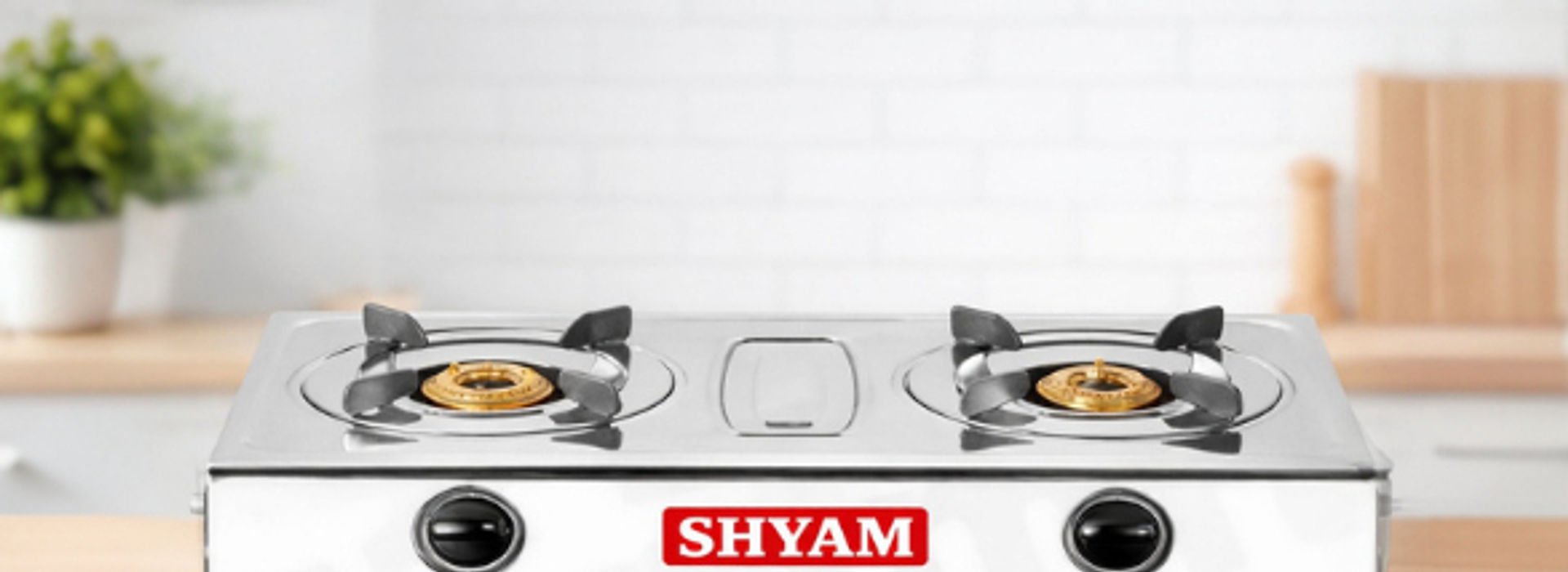
Figure 1: Commercial-grade Glass Top LPG Gas Stove featuring toughened safety glass and heavy forged brass burner assemblies manufactured by Shyam Cookware.
Product Recommendations & Detailed Technical Specifications
Selecting the optimal product tier depends on target market dynamics, residential infrastructure, and regional cooking habitude. Below are the primary recommended configurations engineered for international trade by Shyam Cookware (Khaitan Pressure Cookers Pvt Ltd).
1. Premium 2-Burner Toughened Glass Top LPG Stove (Compact Domestic Tier)
Engineered for high-density urban residential apartments and space-conscious kitchen layouts, the 2-burner variant balances compact dimensions with commercial-grade durability.
- Surface Glass Matrix: 7mm to 8mm chemically toughened soda-lime silica glass with impact-resistant polished bevel edges.
- Burner Architecture: Dual heavy forged brass burners (1 High-Calorie Tri-Ring Burner @ 2.5 kW, 1 Standard Burner @ 1.7 kW).
- Frame Structure: Powder-coated rust-resistant cold-rolled steel body frame with rubberized non-skid shock absorbers.
- Gas Pressure Rating: Optimized for standard Liquefied Petroleum Gas (LPG) at 28-30 mbar / 2.9 kPa pressure differential.
- Best Suited For: Retail appliance chains, entry-level distribution catalogs, and multi-family residential projects.
2. Professional 3-Burner Multi-Tasking Glass Top LPG Stove (Family Tier)
The standard benchmark for mid-to-large households globally. Designed to allow simultaneous high-heat boiling, sim-cooking, and pan-searing.
- Surface Glass Matrix: 8mm thick thermal-shock-resistant glass rated to withstand localized heating up to 800°C.
- Burner Architecture: 1 Small (1.2 kW), 1 Medium (1.8 kW), and 1 Jumbo (3.0 kW) high-efficiency burner arrangement.
- Pan Supports: Enamelled or cast-iron heavy-duty trivets capable of sustaining vessels up to 25 kg per burner without flexing.
- Drip Trays: Deep-drawn 304 stainless steel seamless spill trays for hygienic grease containment.
- Best Suited For: High-volume consumer retail brands, regional wholesalers, and hotel kitchen suites.
3. Deluxe 4-Burner Built-In / Table-Top Dual Purpose Glass Cooktop
Designed for luxury residential kitchens and semi-commercial catering setups requiring high throughput and architectural integration.
- Ignition Tech: Optional 1.5V battery pulse auto-ignition or piezo-electric ignition with copper wiring harnesses.
- Safety Valve Integration: Available Flame Failure Device (FFD) using thermo-electric couple valves to shut off gas flow automatically within 3 seconds of flame extinguishment.
- Best Suited For: OEM private labeling for premium kitchenware distributors and luxury property developers.
| Technical Parameter | Standard Specification | Premium OEM Customization |
|---|---|---|
| Glass Thickness & Type | 7mm Toughened Soda-Lime Glass | 8mm Shatter-Resistant Borosilicate / Toughened |
| Burner Material | Die-Cast Solid Brass Alloys | Forged High-Density Brass (Golden/Black Finish) |
| Thermal Efficiency (%) | > 68% Thermal Energy Transfer | Up to 72% High-Efficiency Eco-Flame Design |
| Mixing Tube & Gas Pipe | Heavy-Duty Galvanized Iron (GI) Assembly | 100% Pure Brass Mixing Tubes & Leak-Tested Pipe |
| Ignition Mechanism | Manual Ignition via External Lighter | Multi-Spark Battery / AC Auto-Ignition |
| Certification Compliance | ISI (IS 4246), ISO 9001:2015 | CE, SASO, SONCAP, CB Scheme Compatible |
Future Procurement Trends in Commercial & Residential Kitchenware (2025–2030)
Global supply chain managers must stay ahead of shifts in consumer preferences, trade policies, and manufacturing innovations. Over the next five years, procurement strategies for the Glass Top LPG Gas Stove category will be governed by four pivotal trends:
A. Rapid Shift to Hybrid & Fuel-Adaptable Gas Valves
Urban gasification projects globally are transitioning municipal zones from bottled LPG (propane/butane mixes) to Piped Natural Gas (PNG/methane). Importers are increasingly requesting "Dual-Calibrated" gas valve assemblies. OEM manufacturers capable of supplying gas stoves fitted with convertible nozzle jets—allowing easy field-conversion between LPG (28-30 mbar) and PNG (20 mbar)—will capture significantly greater market share.
B. Integration of Thermo-Electric Safety Devices (FFD)
Regulatory authorities across the EU, Middle East (SASO), and North America are tightening safety mandates regarding unburned gas leakage. The inclusion of Flame Failure Devices (FFD)—which utilize a micro-thermocouple near the burner tip to detect flame loss and instantly cut off gas supply—is evolving from a luxury add-on into a standardized import requirement.
C. High-Efficiency Eco-Burners to Reduce Carbon Footprint
With rising fuel expenditures globally, consumers are prioritizing appliances with certified high thermal efficiency. Advanced burner designs featuring angled gas ports (swirl flame technology) reduce heat dissipation into ambient air, boosting heat transfer directly to the pan bottom. This cuts LPG consumption by 10% to 15%, aligning with global sustainability directives.
D. Modular Packaging for Cross-Border E-Commerce & Freight Optimization
Container shipping rates and last-mile courier transit handling demand revolutionary packaging design. Historical breakage rates during drop-shipping of glass products previously deterred purely digital sales channels. Modern OEM procurement mandates ISTA-6A drop-test certified packaging, utilizing high-density expanded polyethylene (EPE) corner blocks and honeycomb inner cartoning to guarantee zero-breakage rates.
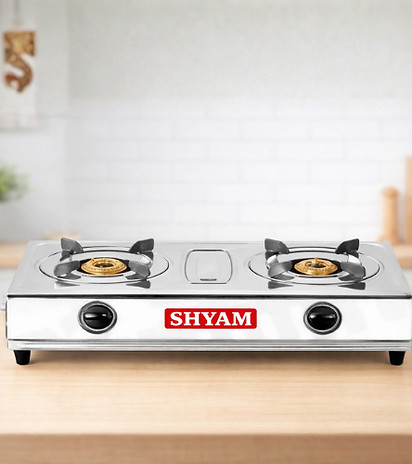
Figure 2: Three-burner Glass Top LPG Gas Stove with spill-proof stainless steel trays and ergonomically designed control knobs.
Global Industry & Technological Development Trends
The manufacturing landscape for gas cooking appliances is undergoing technological modernization. As an industry leader with over 40 years of production history since 1985, Khaitan Pressure Cookers Pvt Ltd (Shyam Cookware) tracks and implements these critical technological advancements:
- Nanotechnology Surface Coatings: Next-generation glass tops are integrating oleophobic and hydrophobic nano-coatings. These micro-thin layers prevent oil splatters and mineral water spots from baking onto the glass surface under heat, turning routine cleaning into a effortless wipe-down.
- Precision Pressure-Die-Cast & Forged Brass Metallurgy: Traditional cast-iron or low-grade sheet-brass burners are prone to thermal warping, port clogging, and uneven gas distribution over time. The industry is standardizing on high-density forged brass burners. Forging eliminates internal air pockets, producing a dense burner core capable of withstanding continuous operational temperatures exceeding 1000°C without deformation.
- Automated Leak-Detection In-Line Quality Assurance: Leading manufacturers are replacing manual soap-bubble testing with automated pneumatic pressure-decay sensors. Every single manifold assembly is pressurized to 1.5 times its standard operational limit, with digital sensors measuring micro-bar pressure drops over 30-second intervals to guarantee 100% leak-free integrity prior to glass assembly.
- Ergonomic & Heat-Insulated Knob Engineering: Heat reflection from heavy cooking vessels onto burner control knobs can cause material degradation or user discomfort. The industry has shifted toward zinc-alloy die-cast knobs fitted with thermal break bakelite inserts, providing heat insulation and smooth tactile engagement.
Comprehensive B2B Procurement FAQ (User Intent & Technical Analysis)
To assist procurement managers, sourcing agents, and wholesale buyers in evaluating suppliers, we have answered the top technical questions frequently queried regarding bulk purchases of Glass Top LPG Gas Stoves.
Q1: Are glass top LPG gas stoves prone to thermal shattering, and how is safety verified during manufacturing?
Answer: Glass thermal shattering in low-quality gas stoves occurs due to localized thermal expansion when improper non-toughened glass is used, or when frame clearance is inadequate. Reputable manufacturers use 7mm or 8mm thermally tempered safety glass processed in automated tempering furnaces at over 600°C followed by rapid air quenching. This creates compressive surface stress. Furthermore, a rubber/silicone grommet cushion isolates the glass from the metal chassis, preventing stress points. Our glass tops pass rigorous thermal shock tests (heating to 250°C and instantly splashing with 15°C cold water) without structural compromise.
Q2: What is the primary difference between die-cast brass burners and forged brass burners for long-term B2B warranty risk?
Answer: Die-cast brass is poured into molds under gravity, which can result in microscopic porosity and structural variance. Under continuous heavy commercial or domestic use, die-cast burners can develop uneven flame patterns as ports degrade. Forged brass burners are stamped under immense hydraulic pressure from solid brass billets. This compacts the molecular grain structure, making them completely non-porous, corrosion-resistant, and thermally stable. Sourcing stoves with forged brass burners reduces product return and warranty claim rates by over 90%.
Q3: Can Shyam Cookware customize nozzle orifice sizes for different country-specific LPG gas pressure standards?
Answer: Yes. Operating gas pressures vary worldwide. While domestic LPG pressure in India is standardized around 29 mbar (2.8-3.0 kPa), export markets in South America, Africa, Europe, or Southeast Asia may operate at 30 mbar, 37 mbar, or 50 mbar. Our engineering team custom-bores the copper injector jets and adjusts the air-to-gas mixing tubes (venturi tubes) to achieve precise stoichiometric combustion for your destination country's exact gas pressure specs.
Q4: How does a Glass Top LPG Gas Stove compare against Stainless Steel Gas Stoves regarding thermal retention and structural load?
Answer: Stainless steel stoves offer high impact resistance but can warp or discolor under intense continuous heat, while dirt can bake into the brushed steel grain. Toughened glass stoves provide complete resistance to corrosion, rust, and food-acid staining, alongside superior visual appeal. For structural loading, heavy-duty glass stoves feature an underlying steel reinforcement cross-bar network that transfers pan weight directly to the chassis legs, allowing each burner to easily hold heavy cookware (up to 25-30 kg) without placing load stress directly onto the glass panel.
Q5: What are the OEM / Private Label Minimum Order Quantities (MOQ) and customization parameters available?
Answer: For custom OEM manufacturing—including private label brand printing on glass, custom carton graphics, bespoke knob designs, and customized pan support styles—our standard MOQ is typically 500 units per model variant, or a mixed 20-foot full container load (FCL). Smaller sample batches can be arranged for market testing and certification compliance validation prior to full container commitments.
Q6: How are fragile glass stoves packaged to ensure zero breakages during transoceanic container shipping?
Answer: Bulk export packaging utilizes a 5-layer drop-tested strategy: (1) Surface protective static film over the glass, (2) Molded high-density EPE foam cradling all four corners and the burner manifolds, (3) Individual 5-ply heavy-kraft corrugated inner boxes, (4) Internal structural cardboard dividers separating metal trivets from the glass, and (5) Heavy-duty outer master cartons bound with polypropylene strapping and palletized with stretch wrapping upon request.
Q7: What certification standards do Shyam Cookware gas stoves comply with for international trade?
Answer: All Shyam Cookware appliances are manufactured under ISO 9001:2015 certified quality management systems. In India, our gas stoves comply strictly with ISI certification standards (IS 4246:2002) mandated by the Bureau of Indian Standards (BIS). For export markets, our products are engineered to readily pass CE (European Conformity), SASO (Saudi Arabia), and SONCAP (Nigeria) technical assessments.
Q8: Is it possible to retrofit auto-ignition systems without altering the base mechanical frame?
Answer: Yes. Our modular frame designs accommodate both manual lighting and integrated auto-ignition mechanisms. We can install battery-powered pulse igniters (1.5V AA or D-cell battery housings) or direct AC-spark ignition systems into the exact same frame architecture based on your distribution requirements.
Enterprise Advantage & Technical Authority: Shyam Cookware
Selecting a manufacturing partner requires establishing verified Trust, Technical Capability, and Reliable Experience (E-E-A-T). Operating under parent firm Khaitan Pressure Cookers Pvt Ltd since 1985, Shyam Cookware stands as one of India's most respected names in kitchenware and appliance manufacturing.
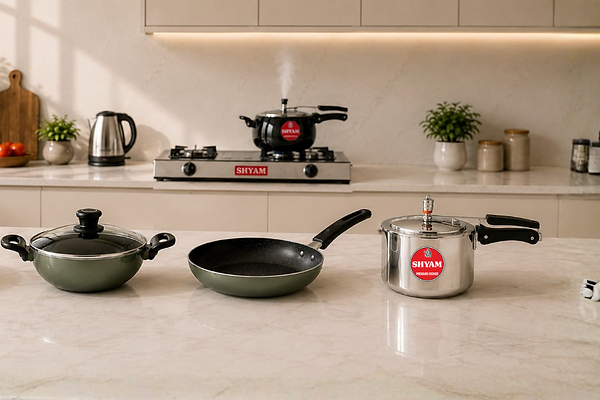
Why Global Buyers Trust Shyam Cookware:
- Four Decades of Manufacturing Leadership (Established 1985): Over 40 years of continuous technical innovation in metal stamping, pressure die-casting, glass assembly, and gas safety engineering headquartered in Kolkata, West Bengal, India.
- Uncompromised Product Quality & ISI Certification: Every pressure cooker and gas stove produced in our facilities complies with rigorous national safety guidelines, ensuring complete consumer safety and long product lifespans.
- Expansive Distribution Footprint: Backed by a thriving domestic network of over 5,000 active dealers, distributors, and wholesale partners across India, with growing export channels across Asia, the Middle East, and Africa.
- In-House R&D and Testing Laboratories: Our production complex features state-of-the-art testing equipment including burst pressure rigs, gas consumption flowmeters, flame stability test booths, and mechanical shock testing benches.
- Flexible OEM & ODM Partnership Models: From complete custom branding and packaging design to bespoke gas stove dimensions, our engineering team works closely with corporate clients to deliver tailored product lines on time and within budget.

40+ Years Heritage
Manufacturing kitchen appliances since 1985 with an unmatched reputation for durability and quality.

Certified Quality
Full compliance with ISI (BIS) standards and ISO 9001:2015 production protocols.

Modern Production
Precision machinery, automated pneumatic leak testing, and high-capacity assembly lines.

Custom Gas Tuning
Gas valve calibration for worldwide pressure standards (LPG, PNG, Butane, Propane).

Toughened Glass
Thermal-shock tested 7mm/8mm glass surfaces designed for heavy cooking duty.

Global Supply Chain
Dedicated B2B trade desk supporting OEM private labeling, fast freighting, and containerization.
Initiate Your B2B Sourcing Order & Custom OEM Inquiry
Are you looking to expand your retail product line, launch a private label kitchenware collection, or procure certified high-efficiency Glass Top LPG Gas Stoves for wholesale distribution? Partner with an established Indian manufacturing powerhouse.
Our international B2B sales team provides fast price quotes, custom technical engineering evaluations, sample dispatches, and complete shipping logistics support.
Ready to Request a Factory Direct Catalog & Wholesale Price List?
Connect directly with our senior trade specialists. We respond to all commercial inquiries within 24 business hours.
Corporate Office: Khaitan Pressure Cookers Pvt Ltd, 26 Rabindra Sarani, Kolkata - 700073, West Bengal, India.