Shyam Cookware Knowledge Hub
Explore expert buying guides, pressure cooker safety tips, and cookware advice.
Expert Buying Guides
Learn how to choose and maintain the best pressure cookers for your modern kitchen.
Tri-Ply & Non-Stick Advice
Discover the benefits of tri-ply, non-stick technology, and LPG gas stove maintenance.
Choosing a Stainless Steel Gas Stove involves more than picking a finish that suits your kitchen. Measure the available space, including the cutout and clearance around the appliance. Check where the gas connection sits, and confirm that installation requirements match your home. Small details matter. A stove that looks compact in a showroom may crowd a narrow counter once its grates and knobs are in place.
Burner performance deserves careful attention. Compare burner sizes and heat settings with the meals you actually cook, from a low simmer to a fast boil. Look for sturdy grates that sit level, controls that are easy to read, and an ignition system you can operate comfortably. Stainless steel can show fingerprints and water spots, so consider how much daily cleaning you are willing to do. Looks can mislead. A glossy surface may photograph beautifully but still require frequent wiping.
These ten buying tips will help you compare practical features, not just appearance. They cover size, burner layout, materials, cleaning, safety features, warranty details, and the service available in your area. A common oversight is focusing on maximum burner output while ignoring whether the smaller burners hold a steady flame. Also, do not assume every model fits every kitchen. Verify the product specifications and installation guidance before committing. There may not be one perfect stove for every buyer; the right choice depends on your space, cooking habits, budget, and tolerance for upkeep.
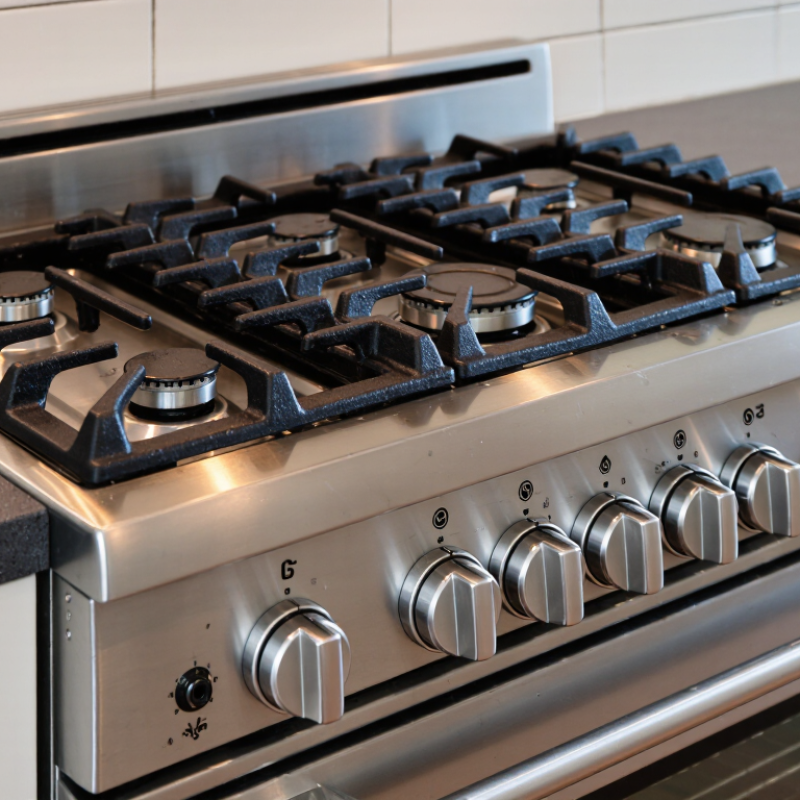
Before buying a stainless steel gas range, check its rating plate or documentation for ANSI Z21.1/CSA 1.1 certification. This standard covers household gas cooking appliances. Look for a clear certification mark from a qualified testing organization, and confirm the model number matches the product you are buying.
Certification is a useful screening step, not a guarantee of perfect installation or operation. NFPA’s Home Cooking Fires report found that cooking equipment was involved in about 49% of reported U.S. home fires from 2017 to 2021. The figure covers cooking equipment broadly, not gas ranges alone. Still, it shows why basic safety checks matter. Ask the seller for the certification record if the label is missing or unclear. Then compare the range’s gas type and connection requirements with your home setup, and have installation handled by a qualified professional. I would not rely on a product listing alone; listings can omit details that are visible on the appliance itself.
A stainless steel gas stove can look like a straightforward replacement, but a small measurement error may leave it sticking past the counter or unable to fit between cabinets. Measure the cutout’s width at the front and back, since walls and cabinets are not always perfectly square. Check depth from the finished wall to the counter edge, and measure the available height from the floor to the countertop. Write down each number.
Tips: Compare your measurements with the stove’s listed installation dimensions, not just its advertised width. Check the manual for required clearances, space for the gas connection, and any rear or side protrusions. Measure twice. A tape can slip, and I would recheck any number that seems surprisingly generous.
Also confirm whether the listed depth includes handles, knobs, or a rear control panel; dimension labels can vary. Leave room for the door to open without hitting an island or nearby cabinet. The existing stove is only a rough guide, since its shape and connection location may differ. Before ordering, ask a qualified installer to verify the space and connection requirements. Even careful measuring has limits.
BTU/h ratings describe a burner’s heat output, but the highest number is not automatically the best choice for everyday cooking. Think about what you actually make: a large pot of soup may benefit from steady, sustained heat, while a quick stir-fry needs a burner that can heat a pan rapidly. For eggs, oatmeal, or a delicate sauce, reliable low heat matters just as much. Check the stove’s burner range, not only its maximum rating. That detail matters.
Look for a useful mix of burner outputs. A higher-output burner can help boil water or sear food, while a smaller burner gives you more control with a saucepan. If several burners have similar ratings, consider whether that matches your usual meals and cookware. A wide frying pan may need a different flame pattern than a narrow pot. Not always obvious. BTU/h figures alone do not tell you how evenly a burner heats, so compare product specifications and, when possible, inspect the flame and controls in person. I once focused too heavily on peak output; for weeknight meals, a burner that adjusted smoothly at low settings proved more useful. Your routine should guide the rating you choose.
When comparing stainless steel gas stoves, treat “18/8” as a useful shorthand, not a complete specification. ASTM A240/A240M lists Type 304 stainless steel at 18.0–20.0% chromium and 8.0–10.5% nickel by mass. Those ranges matter: the actual chemistry can vary within the standard. Ask the seller for a material certificate linked to the stove’s production batch, and check that it names Type 304 and the relevant ASTM specification. A polished surface alone proves little.
Chromium supports corrosion resistance, while nickel helps maintain the steel’s structure and performance. The Nickel Institute’s technical guidance on stainless steel explains nickel’s role in austenitic grades such as 304. Still, grade is only one buying check. A 304 outer panel does not mean the burner frame, fasteners, or internal parts use the same steel. Look closely at cut edges, seams, and areas near burner openings, where heat and spills meet. A magnet test is not a dependable grade check; processing can make some 304 parts slightly magnetic. Easy to miss. Compare the paperwork with the parts you can inspect, and ask which components are actually Type 304.
| No. | Buying Check | What to Verify | Why It Matters |
|---|---|---|---|
| 1 | Confirm the stainless steel grade | For ASTM A240 Type 304, the nominal description is 18% chromium and 8% nickel. The standard chemistry ranges are 18.0–20.0% chromium and 8.0–10.5% nickel. | Grade information helps identify the alloy used in the specified part. Ask whether the grade applies to the cooktop, control panel, trim, or another component; not every stove part is necessarily stainless steel. |
| 2 | Request material documentation | Look for a product specification, material declaration, or mill test certificate that identifies the grade and the component it covers. | A “stainless steel” description alone does not establish a particular grade, thickness, or coverage across the appliance. |
| 3 | Check sheet thickness | Compare thickness in millimetres or inches when available. If gauge is listed, confirm the gauge standard and remember that a lower gauge number generally indicates thicker sheet. | Thickness can affect rigidity and resistance to dents, but gauge numbers are not directly comparable without knowing the measurement standard. |
| 4 | Inspect construction and edges | Examine panel fit, seams, corners, burner supports, and the finish around cut-outs. Check that controls and grates sit securely. | Consistent fit and stable components are practical indicators of assembly quality; appearance alone cannot verify the steel grade. |
| 5 | Compare burner input | Review each burner’s input rating in BTU/h or kW, including any low-output simmer setting. Compare figures using the same units. | Different burner ratings suit different tasks. A higher maximum input does not by itself indicate better overall performance. |
| 6 | Match the gas type | Confirm whether the model is configured for natural gas or propane (LPG), and check whether conversion is supported and performed according to the manufacturer’s instructions. | Gas type and setup affect safe operation. Installation or conversion should follow the appliance instructions and local requirements. |
| 7 | Measure the installation space | Check the cut-out width, depth, and required clearances against the model’s installation manual. Also verify gas connection location and ventilation requirements. | Dimensions and clearance rules vary by model and jurisdiction, so use the specific installation documentation rather than a general estimate. |
| 8 | Review grates and burner components | Check grate stability, burner-cap fit, and whether the parts can be removed for cleaning. Confirm the care instructions for each component. | Removable, well-fitting parts can make routine cleaning easier and help reduce movement while cookware is in use. |
| 9 | Read cleaning and care guidance | Follow the appliance’s care instructions. Avoid leaving chlorine bleach or chloride-containing cleaners on stainless steel, and rinse and dry the surface after cleaning. | Chlorides can contribute to pitting or staining on stainless steel. Cleaning products and methods should be compatible with the appliance finish. |
| 10 | Check safety, service, and warranty details | Verify applicable local gas-appliance certification, the warranty terms, available service support, and the availability of replacement parts. | Requirements and warranty coverage vary by market and model. Confirm the details for the exact appliance before purchase. |
Note: ASTM A240 Type 304’s “18/8” label is a nominal shorthand, not a guarantee of exact percentages. Confirm the specified grade and material documentation for the particular stove component you are evaluating.
Before buying a stainless steel gas stove, confirm whether your home supplies natural gas or propane. They are not interchangeable fuels. A stove configured for one may need approved conversion parts and pressure adjustments before using the other. Check the appliance rating plate and installation manual, not just the product listing. Small detail, big consequence.
NFPA 54, the National Fuel Gas Code, sets installation requirements for fuel-gas piping and appliances; its 2024 edition is a useful reference for buyers and installers. Local rules and the manufacturer’s instructions also matter. Ask a qualified gas professional to verify the supply pressure, connector, shutoff location, and any conversion procedure before installation. Never assume a conversion kit fits every model. That assumption can be costly.
Fuel availability varies by region. The U.S. Energy Information Administration’s 2020 Residential Energy Consumption Survey found natural gas was the primary space-heating fuel in about 47% of U.S. homes. That figure describes heating, not stove ownership, but it shows why a buyer should check the actual connection at home. Look for a clearly labeled fuel setting, compatible regulator, and documented conversion instructions. A quick visual check is not enough; fittings can look right while being wrong. Verify before delivery.
Look for ANSI Z21.1/CSA 1.1 certification on the rating plate or product documents. Match the model number to the range. A shiny finish proves nothing.
Ask the seller for the certification record. Check the model number carefully. Online listings may omit details.
No. It is a screening step, not a guarantee of correct installation or operation. Have a qualified professional install the range.
Consider your everyday meals, not just the highest number. High heat can boil water quickly. Low heat helps with eggs or delicate sauces.
Varied burner outputs can suit different pots and tasks. Check the flame pattern with your cookware. A wide skillet may heat differently from a narrow saucepan.
No. BTU/h describes heat output, not evenness or low-heat control. I once focused too much on peak output. Smooth adjustment mattered more.
The fuels are not interchangeable. Approved conversion parts and pressure adjustments may be needed. Never assume a conversion kit fits your model.
Ask them to verify the fuel supply, pressure, connector, shutoff location, and conversion instructions. NFPA 54 and local requirements also matter. Verify before delivery.
Choosing a Stainless Steel Gas Stove starts with safety and fit. Confirm that the range is certified to ANSI Z21.1/CSA 1.1 for household gas appliances, then measure the cabinet cutout and compare it with the model’s listed installation dimensions, including any required clearances. Accurate measurements help ensure the appliance fits as intended and can be installed according to its instructions.
Next, compare burner BTU/h ratings with the way you cook: higher output may suit rapid boiling, while a range of burner outputs offers flexibility for simmering and everyday meals. Check the steel specification as well; ASTM A240 Type 304 stainless steel is nominally composed of 18% chromium and 8% nickel. Finally, verify whether the stove is configured for your available fuel and follow the manufacturer’s approved conversion requirements and applicable NFPA 54 installation rules.