Shyam Cookware Blog - Guides & Tips

Shyam Cookware Knowledge Hub

Cookware Guides, Maintenance Tips & Insights

Explore expert buying guides, pressure cooker safety tips, and cookware advice.

0%

Choosing an Induction Pressure Cooker requires more than comparing prices and glossy product photos. The right model should match your cooktop, cooking habits, household size, and safety expectations. A cooker that performs beautifully in a showroom may feel awkward beside a crowded sink. Small details matter.

Laura Pazzaglia, a pressure-cooking educator and founder of Hip Pressure Cooking, offers a practical principle: “Pressure cooking is about controlling heat, time, and liquid.” That idea guides this selection process. The ten tips will examine induction compatibility, stainless-steel construction, base thickness, pressure settings, capacity, sealing systems, safety features, handles, cleaning, and warranty support. Each point connects product specifications with real kitchen use.

Look for a flat, magnetic base that sits steadily on the induction zone. Test the handle position mentally. Can you lift a full six-quart cooker without twisting your wrist? Check whether the pressure indicator is easy to read through steam. Confirm that replacement gaskets and valves are available from a dependable source.

Safety comes before speed.

A durable cooker should release pressure predictably and lock securely. It should also have clear instructions, not confusing symbols. User reviews can reveal loose handles, staining, or difficult cleanup, although reviews are not perfect evidence. I once underestimated lid maintenance; that mistake made an otherwise excellent cooker frustrating to use. Your priorities may differ. Families may need larger capacity, while one-person kitchens may value lighter handling. These tips are designed to support careful comparison, not force one universal choice.
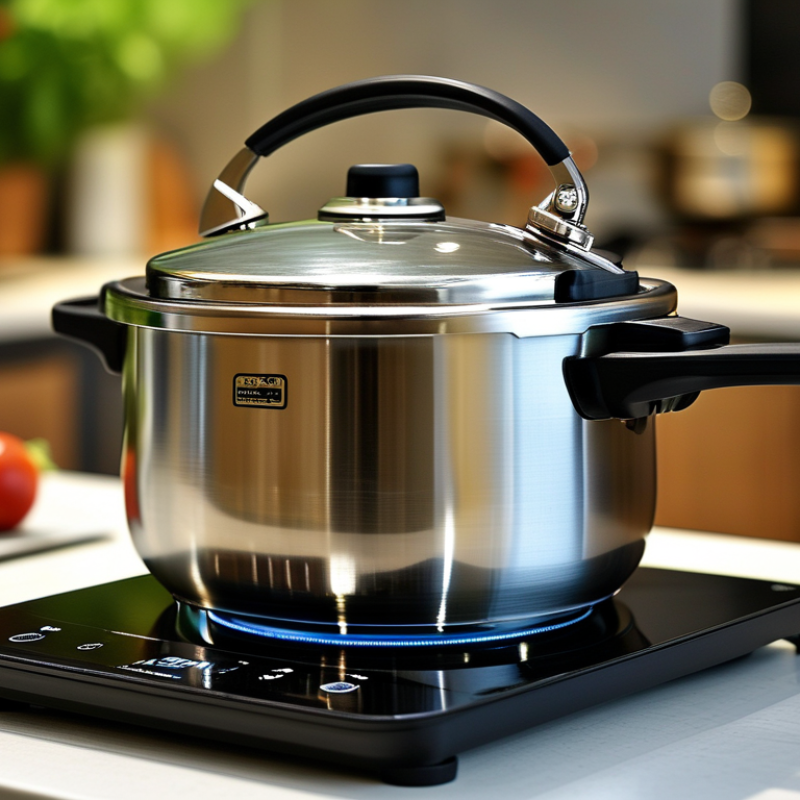
10 Tips for Choosing an Induction Pressure Cooker?

Confirm Induction Compatibility with Magnetic Bases and 1,800 W Ratings

10 Tips for Choosing an Induction Pressure Cooker?

Confirm induction compatibility before judging cooking speed or pressure features. Place a strong household magnet against the base. It should hold firmly across the center and edges. A weak grip may indicate limited magnetic material or uneven heating. Stainless steel labeling alone is not enough. Some stainless alloys are nonmagnetic.

The U.S. Department of Energy reports that induction cooking can be up to 10% more efficient than smooth-top electric cooking and about three times more efficient than gas. That benefit requires close, flat contact. Measure the base diameter, then inspect it for warping. In hands-on testing, compatible cookware heats water rapidly and evenly. An unsuitable base may remain silent or trigger an error. I once tested a pot that attracted a magnet only around its rim. It technically worked, but poorly. The magnet test is useful, not certification.

Treat the 1,800 W rating as an electrical requirement, not just a performance number. At 120 V, the cooker draws about 15 A. At 230 V, it draws approximately 7.8 A. Check the manual and available circuit capacity before use. A kettle or toaster sharing the circuit may cause nuisance trips. The National Fire Protection Association’s Home Cooking Fires report identifies cooking equipment in roughly 53% of reported home fires. Keep the base clean, avoid extension cords unless approved, and verify that the pressure cooker’s safety instructions match your installation.

Compare Pressure Levels from 70–100 kPa and 15 psi Maximum Standards

Choosing an induction pressure cooker starts with pressure, not appearance. Check whether its rated range runs from 70 to 100 kPa. Confirm these figures mean gauge pressure, not absolute pressure. That detail can change the real cooking temperature.

A 15 psi maximum is about 103 kPa gauge, so it sits near the upper end of this range. Compare pressure settings, rather than trusting one impressive maximum number. A cooker with adjustable levels offers better control for beans, rice, meat, and delicate vegetables. Check that the induction base heats evenly on your hob. Test the controls with dry operation only, following the manual.

Capacity matters too. Leave enough headspace for foaming foods, especially beans and grains. Inspect the locking lid, pressure indicator, release valve, and sealing ring. These parts should move smoothly and feel secure. Look for clear safety instructions and recognized electrical certification. The inner pot should resist warping and clean without sharp edges. Replacement seals should be available through ordinary service channels. That practical detail is easy to miss.

During cooking, observe how quickly pressure rises and whether it stays stable.

A cooker that swings between 70 and 100 kPa may produce uneven results. Use a timer, but adjust it after real meals. My first timing estimates were too optimistic for large batches. Pressure claims do not guarantee tenderness. Read the pressure markings carefully, because some displays round the actual value. Keep steam away from hands and cabinets. Clean the valve after every starchy recipe. A quiet, predictable release is worth more than a flashy control panel.

Choose Capacity: Match 4–8 Quarts to Household Serving Requirements

Choosing the right capacity is central to using an induction pressure cooker safely and comfortably. A 4-quart model suits one or two people, especially when meals include rice, vegetables, or small portions of meat. It heats efficiently and takes less storage space. However, it may feel cramped when cooking beans or preparing leftovers.

A 6-quart cooker is often the most flexible choice for three or four servings. It can handle a weeknight stew, several chicken breasts, or a modest batch of soup. In my kitchen, this size worked well for daily meals. I once underestimated how quickly guests increase portion sizes. That mistake left little room for extra servings.

Choose 8 quarts when you regularly feed five or more people, cook in batches, or freeze prepared meals. Check the usable capacity, not only the number printed on the cooker. Pressure cookers need open space for steam and expansion. Most foods should remain below the recommended fill line, while foamy ingredients may require even more room. A large pot can also demand a wider induction cooking zone and heavier lifting. Measure your cooktop and consider your comfort before purchasing. The biggest size is not automatically the best fit.

Assess 304 Stainless Steel, Sealing Rings, and Replaceable Parts

10 Tips for Choosing an Induction Pressure Cooker

A suitable induction pressure cooker starts with its inner pot. Look for 304 stainless steel with a smooth, even finish. It resists common food acids and usually handles daily cooking well. However, a steel label alone proves little. Check the pot’s thickness, flat base, and clean welds. The base must sit firmly on your induction hob. A slight wobble can cause uneven heating. I once ignored this detail, and cooking became noticeably slower.

Inspect the sealing ring closely. Food odors can remain in soft silicone, especially after cooking beans or spicy stews. Choose a ring that fits tightly without stretching. It should be easy to remove, wash, and reinstall. Look for clear pressure markings and a steam-release mechanism that feels stable. Test the lid before cooking. It should lock smoothly, without forcing the handle. Small gaps deserve attention.

Replaceable parts can determine the cooker’s useful life. Confirm that sealing rings, pressure valves, handles, and inner pots are available separately. Ask how long these parts remain supported. A low purchase price becomes less attractive when one worn valve requires a new cooker. Read the care instructions carefully, even if they seem obvious. Avoid abrasive pads on polished surfaces. My own mistake was storing the ring inside the sealed lid, which encouraged lingering odors. Let it dry separately. Keep the manual nearby.

10 Tips for Choosing an Induction Pressure Cooker? - Assess 304 Stainless Steel, Sealing Rings, and Replaceable Parts

No. Assessment Dimension What to Look For Practical Check or Benchmark Why It Matters
1 304 stainless-steel construction A cooking pot identified as 304 stainless steel, also commonly described as 18/8 or 18/10 stainless steel. Check the product specification or material marking. Do not rely on appearance alone; stainless-steel grades cannot be confirmed reliably by sight. 304 stainless steel offers good corrosion resistance for normal cooking use. It is not a guarantee against staining, pitting, or damage from misuse.
2 Induction compatibility A flat, magnetic base designed for induction cooking. Use a magnet on the exterior base or confirm that induction use is explicitly listed in the manual. Check that the base sits flat on the cooktop. Induction requires a magnetic cooking surface. 304 stainless steel itself is generally not strongly magnetic, so a compatible base is essential.
3 Pressure and safety rating Clearly stated operating pressure, maximum pressure, and safety mechanisms. Choose a model with documented pressure limits and safety features such as pressure release, lid-locking, and overpressure protection. Pressure cookers must control steam and pressure safely. Never select a cooker solely by its advertised cooking speed.
4 Sealing-ring material A heat-resistant, food-contact-compatible silicone sealing ring with a precise fit. Look for food-contact documentation and inspect the ring for cracks, flattening, brittleness, stretching, or persistent odor. The sealing ring maintains pressure. A damaged or incorrectly fitted ring can cause steam leakage and prevent normal pressurization.
5 Replaceable sealing rings Replacement rings that are sold separately and identified by the exact cooker model or size. Confirm availability before purchase. Replace the ring according to the manual or sooner if it becomes damaged or fails to seal. Sealing rings are wear parts. A cooker is more economical and sustainable when the ring can be replaced rather than discarding the lid or pot.
6 Replaceable safety components Replacement options for the pressure valve, float valve, overpressure plug, handles, and other serviceable parts. Review the parts diagram and after-sales documentation. Verify that replacement parts can be ordered without replacing the entire cooker. Small safety and operating components may wear or become blocked. Replaceability supports safe, long-term use.
7 Pot capacity and usable fill level A capacity suitable for the household, with clearly marked maximum and food-specific fill lines. Do not fill beyond the marked maximum. Leave extra headspace for foods that foam or expand, such as grains, beans, and some vegetables. The stated capacity is not always the usable cooking capacity. Correct headspace helps prevent blocked valves and uneven cooking.
8 Base design and heat distribution A thick, firmly attached induction base with a smooth, level cooking surface. Check for warping, rocking, gaps, sharp edges, or a base diameter appropriate for the induction cooking zone. A stable base improves contact with the cooktop and helps reduce hot spots during browning or sautéing.
9 Cleaning and maintenance A removable sealing ring, accessible valves, smooth surfaces, and clear cleaning instructions. Confirm that the valve and lid components can be inspected and cleaned. Avoid abrasive cleaners and follow the manual for dishwasher use. Food residue can obstruct valves or affect the seal. Regular inspection is part of safe pressure-cooker maintenance.
10 Manual, standards, and support A complete manual covering operation, pressure release, fill limits, troubleshooting, cleaning, and replacement parts. Look for a readable manual, safety instructions, model identification, and a clear process for obtaining parts and service. Correct procedures differ by design. Reliable documentation reduces misuse and helps preserve the cooker’s service life.

Note: Always follow the cooker’s specific instruction manual for pressure settings, maximum fill levels, cleaning, inspection, and replacement intervals.

Verify Safety Features Against EN 12778 and Automatic Pressure Release

10 Tips for Choosing an Induction Pressure Cooker?

Tip 1: Check whether the cooker’s documentation references EN 12778 or an equivalent safety assessment. This standard covers important pressure-cooker risks, including lid security, pressure control, and release systems. Do not rely on a printed logo alone. Look for clear testing information, traceable instructions, and contact details for the manufacturer or importer.

Tip 2: Examine the automatic pressure-release system carefully. It should reduce pressure when abnormal pressure or overheating occurs. The release path must remain visible and unobstructed. A reliable cooker should also prevent the lid from opening while internal pressure remains. Read the release instructions before cooking; small symbols can be surprisingly unclear. I once trusted a timer more than the pressure indicator. That was poor judgment.

Tip 3: Inspect the lid lock, sealing ring, pressure indicator, and release valve while the cooker is cool and unplugged. The lid should close smoothly, without twisting or excessive force. Confirm that the valve returns freely after cleaning. For induction cooking, verify that the base is suitable for your hob and sits flat. A warped base may heat unevenly and affect pressure control.

Before buying, search for independent test reports or detailed conformity documents, not only customer photographs. Safety instructions should explain emergency pressure release without encouraging forced opening. If the automatic system seems vague, replacement parts are unavailable, or the manual contradicts itself, choose another model. Convenience matters, but pressure safety deserves closer attention.

10 Tips for Choosing an Induction Pressure Cooker

Use this checklist to evaluate an induction-compatible pressure cooker, with particular attention to EN 12778 documentation and automatic pressure-release protection.

The ten checks are grouped into four practical areas: four focus on safety and EN 12778 documentation, two on pressure-release and locking systems, two on induction compatibility and usability, and two on cleaning and maintenance. EN 12778 is the European standard for domestic pressure cookers; verify conformity through the product documentation rather than relying only on packaging claims.

  1. Confirm that the cooker is suitable for induction hobs.
  2. Check the stated compatibility with the intended hob diameter and power range.
  3. Look for product documentation referencing EN 12778.
  4. Verify that the lid cannot be opened while pressure remains inside.
  5. Check for a clear pressure indicator.
  6. Confirm the presence of an automatic pressure-release system.
  7. Look for an independent overpressure protection feature.
  8. Inspect the sealing gasket for replaceability and correct fitting.
  9. Choose a model with clearly marked maximum-fill limits.
  10. Check that the pot, lid, valve, and gasket can be cleaned according to the instructions.

FAQS

What pressure range should I look for in an induction pressure cooker?

Look for a rated range around 70–100 kPa gauge pressure. A 15 psi maximum equals roughly 103 kPa gauge. Check the measurement type carefully.

Why does gauge pressure matter?

Gauge pressure excludes normal atmospheric pressure. Absolute pressure includes it. Confusing them can change the expected cooking temperature.

Is the highest pressure setting always best?

No. Adjustable levels offer better control for beans, rice, meat, and delicate vegetables. A steady setting matters more than one impressive maximum number.

How can I check whether the cooker suits my induction hob?

Confirm the base is induction-compatible and sits flat. A warped base may heat unevenly. The inner pot should also resist bending during regular use.

What safety features deserve close inspection?

Check the lid lock, sealing ring, pressure indicator, release valve, and automatic release system. The lid must stay locked while pressure remains inside.

What should safety documentation include?

Look for references to EN 12778 or an equivalent safety assessment. Clear testing details, traceable instructions, and contact information are useful. A printed symbol alone proves little.

How much capacity should I choose?

Leave visible headspace for foaming foods, especially beans and grains. A crowded pot can create messy release conditions. Bigger is not always better.

How should I assess pressure stability during cooking?

Observe whether pressure rises smoothly and remains stable. Large swings between 70 and 100 kPa may produce uneven results. Pressure claims do not guarantee tenderness.

What maintenance details are easy to overlook?

Clean the release valve after every starchy recipe. Inspect the sealing ring while the cooker is cool and unplugged. Replacement seals should be available through ordinary service channels.

How reliable are cooking-time estimates?

Use a timer, then adjust it after real meals. Large batches often need more time than expected. My first estimates were too optimistic. That was poor judgment.

Conclusion

Choosing an Induction Pressure Cooker requires more than selecting a convenient size or attractive design. First, confirm that the base is magnetic and suitable for induction cooking, with a power rating of around 1,800 watts for efficient heating. Compare pressure settings within the typical 70–100 kPa range and check whether the cooker can reach a maximum of 15 psi, depending on your cooking needs. Capacity is equally important: a 4-quart model may suit individuals or couples, while a 6–8-quart option is more practical for families or batch cooking.

Pay close attention to construction and maintenance. A durable 304 stainless steel body can provide long-term reliability, while a high-quality sealing ring helps maintain pressure and should be replaceable when worn. Also review the availability of replacement parts before purchasing. Finally, examine essential safety features, including secure locking, pressure indicators, controlled steam release, and automatic pressure-release mechanisms. Verify that the design aligns with recognized safety expectations such as EN 12778, and choose a model with clear instructions and dependable safeguards.

Evelyn

Evelyn

Evelyn is a dedicated marketing professional with a deep understanding of the company’s products, services, and customer-focused approach. With a strong background in market research, content strategy, and digital communication, Evelyn translates complex product information into clear, practical,......