Shyam Cookware Blog - Guides & Tips

Shyam Cookware Knowledge Hub

Cookware Guides, Maintenance Tips & Insights

Explore expert buying guides, pressure cooker safety tips, and cookware advice.

0%

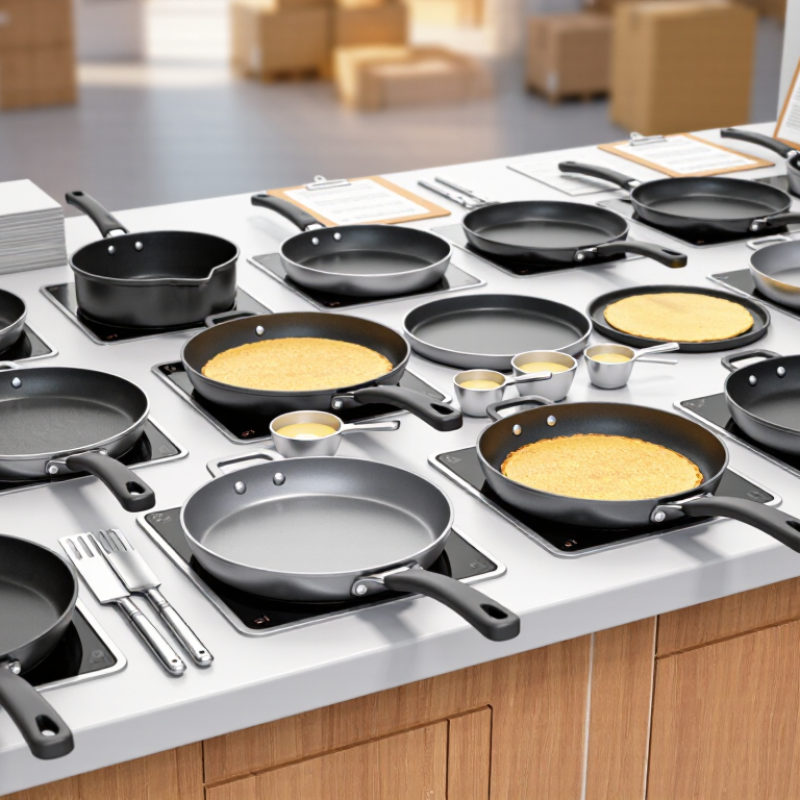
Choosing the right Non-Stick Dosa Tawa supplier requires more than comparing catalog prices. Global buyers need consistent quality, stable production, clear documentation, and responsive service. A smooth dosa should spread evenly, release cleanly, and develop a golden edge without excessive oil. These details often reveal more than polished product photographs.

This guide introduces ten suppliers serving international cookware markets. Each company is considered through practical factors, including aluminum or cast iron construction, coating performance, base compatibility, handle design, packaging, minimum order quantities, and export experience. Factory capabilities, sample policies, certifications, and communication standards also matter. A supplier may offer an attractive price, yet weak packaging can cause scratches before the pan reaches a retailer.

Real testing remains essential. Buyers should request samples, inspect coating uniformity, measure heating performance, and test the tawa on gas and induction where relevant. Ask for current compliance documents and written warranty terms. Do not rely on old certificates.

The ranking is useful, but it is not permanent. Market conditions, raw material costs, and manufacturing teams can change. Even established suppliers may have inconsistent batches. That is an uncomfortable reality. This overview therefore supports careful comparison rather than automatic selection. With verified samples, transparent specifications, and realistic order planning, buyers can identify a Non-Stick Dosa Tawa partner that supports dependable quality and long-term customer trust.
Top 10 Non Stick Dosa Tawa Suppliers for Global Buyers

What Is a Non-Stick Dosa Tawa and Why Does It Matter?

A non-stick dosa tawa is a flat cooking pan designed for thin, crisp South Indian crepes. Its smooth food-contact surface helps spread batter evenly and release the dosa with less tearing. A stable base also supports consistent heat across the cooking area. That matters because uneven heating can leave pale centers, burnt edges, or undercooked batter.

For global buyers, the coating is only one part of the product. Check the substrate, base thickness, handle attachment, surface hardness, and declared temperature limits. A pan may look excellent in a product photo yet heat poorly on induction equipment. Compatibility must be tested, not assumed. Ask suppliers for food-contact documentation, coating specifications, batch inspection records, and sample units from current production. These details show reliability better than attractive packaging.

Daily use reveals small weaknesses. Batter residue should lift without aggressive scraping, and the handle should remain comfortable during repeated cooking. Wooden or silicone tools are generally safer for preserving the surface, while metal utensils may shorten its service life. Even a good pan can disappoint if it is overheated empty or cleaned harshly. The coating is not permanent. Some suppliers overstate durability, and buyers should challenge vague claims with test conditions, warranty terms, and replacement policies. A practical evaluation should include several dosa batches, different heat settings, and careful inspection after washing. Short testing feels inconvenient, but skipping it creates larger costs later.

How to Evaluate Suppliers for Global Dosa Tawa Sourcing

Top 10 Non Stick Dosa Tawa Suppliers for Global Buyers

Choosing a dosa tawa supplier requires more than comparing prices. Start with the pan’s material, thickness, weight, and base design. A stable base should sit flat on gas, electric, or induction equipment when applicable. Ask for coating specifications, food-contact test reports, and production quality records. These documents should be current and traceable.

Request samples before placing a large order. Cook several dosas at different temperatures. Check heat distribution, release performance, handle strength, and surface marks after repeated washing. In practical sourcing, I have found that a beautiful sample may not represent regular production. Ask how the supplier controls coating thickness and rejects defective pieces. Verify minimum order quantities, lead times, carton protection, and replacement policies. Small details matter.

Tips: Compare like with like. A low quotation may exclude packaging or testing. Inspect the sample yourself, not only through photographs. Consider a factory video call or an independent inspection. Confirm the supplier can repeat the same specifications across batches. Also, request written approval for artwork, dimensions, and labeling before production. I would not rely on vague promises. Some suppliers communicate well but document poorly, which can create avoidable disputes. A reliable partner explains limitations clearly and accepts reasonable quality checks.

Top 10 Non-Stick Dosa Tawa Suppliers by Product Strengths

Top 10 Non-Stick Dosa Tawa Suppliers by Product Strengths

Global buyers can compare ten supplier profiles by practical product strengths. A ceramic-coating supplier suits buyers seeking a smooth, low-oil cooking surface. A PTFE specialist often provides stronger release performance and easier cleaning. Cast-aluminum suppliers offer quick heating and useful weight control. Hard-anodized cookware makers usually deliver better scratch resistance for busy kitchens. These differences matter during daily dosa production.

An induction-ready supplier focuses on magnetic bases and even heat distribution. This design supports electric, gas, and induction cooking, but buyers should verify compatibility with actual testing. A high-volume factory can offer stable pricing and repeatable dimensions. An export-focused supplier may provide safer packaging, barcode labeling, and complete shipping documents. Customization specialists can adjust handle shapes, coating colors, and logo placement. Small-batch suppliers often respond faster to sample changes. That flexibility can reduce early mistakes.

A water-based coating supplier may attract buyers with lower-emission production goals, although performance must be checked over time. A quality-control driven supplier typically tests coating adhesion, flatness, handle strength, and thermal cycling. A private-label supplier can combine packaging support with flexible minimum order quantities. No supplier wins every test. A lightweight pan may heat quickly but feel less stable on a commercial burner. A thicker base may improve heat retention, yet increase shipping costs. Buyers should request samples, compare heat patterns, inspect coating edges, and review batch records before placing larger orders. Supplier claims need evidence.

Comparing Quality, Pricing, Certifications, and Export Services

Top 10 Non Stick Dosa Tawa Suppliers for Global Buyers

When comparing the top ten suppliers, start with coating quality, base thickness, and heat distribution. A reliable tawa should heat evenly across the center and outer edge. Ask for coating specifications, abrasion test results, and food-contact declarations. Suppliers with controlled production records usually explain these details clearly. Vague answers deserve caution.

Pricing needs careful comparison. A low unit price may exclude packaging, tooling, inspection, or export documentation. Request quotations under matching terms, such as EXW or FOB, with the same diameter and order quantity. Confirm minimum order quantities, sample charges, replacement policies, and production lead times. I once focused too heavily on the cheapest offer. The landed cost was higher than expected.

Certifications can support trust, but they need verification. Check whether the supplier maintains ISO 9001, relevant food-contact test reports, and market-specific declarations. A certificate should show the issuing body, validity period, product scope, and test standard. Export service also matters. Experienced suppliers provide carton dimensions, pallet details, customs codes, and shipping documents without repeated reminders. Ask whether packaging protects the handle and cooking surface during long sea transport. Small scratches create large disputes. Video inspections, pre-shipment checks, and retained samples improve accountability. Still, no document replaces independent testing when entering a strict market.

Top 10 Non Stick Dosa Tawa Suppliers for Global Buyers - Comparing Quality, Pricing, Certifications, and Export Services

Comparative supplier profiles for international sourcing. Pricing is indicative FOB pricing in USD for standard 26–30 cm aluminum dosa tawas and may vary by order volume, coating specification, packaging, tooling, and destination. Certification and testing documents should be independently verified before purchase.

Rank Supplier Profile Primary Manufacturing Region Typical MOQ Indicative FOB Price / Unit Construction and Coating Potential Compliance Documents Typical Lead Time Export Services Quality Score
1 Supplier Profile 01 Western India 500–1,000 units US$3.20–5.80 Die-cast or heavy-gauge aluminum body; two-layer or three-layer non-stick coating; induction-compatible base available. Food-contact declaration; coating migration test; ISO 9001 may be available; verify FDA or EU test scope. 30–45 days OEM packaging, barcode labels, export cartons, mixed-container loading. 9.1/10
2 Supplier Profile 02 South India 1,000–2,000 units US$2.60–4.90 Pressed aluminum construction; standard non-stick interior; heat-resistant phenolic or stainless-steel handle options. Batch traceability records; food-contact test reports; ISO 9001 documentation may be offered upon request. 25–40 days Private labeling, carton customization, commercial invoices, packing lists, and freight coordination. 8.8/10
3 Supplier Profile 03 East China 1,000–3,000 units US$2.10–4.30 Gravity die-cast aluminum; reinforced base; two-layer or three-layer coating; optional full induction plate. FDA 21 CFR 175.300 or EU food-contact testing may be arranged; factory quality-management records available. 35–50 days Tooling support, pre-production samples, inspection coordination, FCL/LCL export handling. 8.7/10
4 Supplier Profile 04 Central China 2,000–5,000 units US$1.80–3.70 Lightweight pressed aluminum; basic non-stick coating; compatible with gas and electric cooktops; induction version optional. Coating adhesion and abrasion reports; food-contact documentation generally available by model and coating system. 30–45 days High-volume production, retail-ready packaging, palletization, and third-party inspection support. 8.4/10
5 Supplier Profile 05 Western Turkey 500–1,500 units US$4.20–7.60 Thick-gauge aluminum or cast aluminum; reinforced non-stick surface; ergonomic heat-resistant handles. EU food-contact documentation; coating safety reports; ISO 9001 certification may be available for selected facilities. 35–55 days European road and sea freight coordination, multilingual documents, customized retail cartons. 8.6/10
6 Supplier Profile 06 South Korea 300–800 units US$6.50–11.50 Premium cast aluminum; multilayer non-stick coating; precise flatness control; induction-ready options. Detailed coating performance reports; food-contact compliance files; factory quality systems may include ISO 9001. 40–60 days Small-batch OEM, premium packaging, sample approval process, and technical product documentation. 9.2/10
7 Supplier Profile 07 North Vietnam 1,000–2,500 units US$2.40–4.60 Pressed or cast aluminum body; standard non-stick coating; riveted or molded handles; multiple diameter options. Food-contact test reports; coating thickness records; ISO 9001 or factory audit documentation may be requested. 30–50 days OEM color matching, export carton design, container consolidation, and destination-port coordination. 8.3/10
8 Supplier Profile 08 Bangladesh 1,000–3,000 units US$2.20–4.10 Pressed aluminum body; economical non-stick coating; basic handle configurations; gas and electric compatibility. Supplier-specific food-contact reports; coating adhesion testing; buyer audits recommended for new programs. 35–55 days Cost-focused OEM production, export documentation, carton marking, and sea-freight booking assistance. 7.9/10
9 Supplier Profile 09 Eastern Europe 500–1,000 units US$5.10–9.20 Heavy-gauge aluminum; reinforced non-stick coating; stable base geometry; premium handle and packaging options. EU food-contact declaration; REACH-related material statements where applicable; independent laboratory testing available. 30–50 days EU distribution support, multilingual labels, palletized delivery, and retailer compliance documentation. 8.9/10
10 Supplier Profile 10 Southern China 500–2,000 units US$2.00–4.00 Pressed aluminum or cast aluminum; two-layer non-stick coating; induction base and detachable handle options. FDA or EU food-contact testing may be arranged; factory inspection and pre-shipment reports available by order. 25–45 days Low-MOQ customization, logo printing, product photography samples, and international courier shipping. 8.2/10

Note: “Potential compliance documents” identifies documentation commonly requested in international cookware procurement; it does not confirm that every supplier profile holds every listed certification. Buyers should verify the issuing laboratory, certificate validity, product model, coating system, and applicable destination-market requirements.

How Global Buyers Can Select and Order the Right Supplier

Selecting among the top 10 non stick dosa tawa suppliers requires more than comparing prices. Global buyers should examine manufacturing experience, coating technology, and export reliability. Ask for factory photographs, production capacity, and recent quality records. A supplier with clear traceability usually handles problems faster.

Request samples before placing a large order. Test the tawa on gas and induction, if both are required. Check heat distribution, handle strength, base flatness, and coating uniformity. Cook several dosas. Look for sticking, peeling, or uneven browning. Small defects matter.

Your inquiry should state diameter, thickness, material, packaging, logo requirements, minimum order quantity, and destination port. Confirm food-contact documentation, inspection procedures, lead time, and shipping terms in writing. Use a pre-shipment inspection for large orders. It can reveal warped bases or damaged cartons. Ask how rejected units are replaced. A vague answer is a warning.

Price is only one part. A cheaper tawa may create higher return costs. Compare landed cost, not factory price alone. Check communication speed and technical clarity. These details often predict cooperation after payment. Still, no supplier checklist is perfect. Samples may pass while mass production changes. Keep approval samples, inspection photos, and agreed specifications on record. Recheck the first shipment carefully.

Top 10 Non-Stick Dosa Tawa Suppliers for Global Buyers

Material selection is an important part of evaluating a dosa tawa supplier. The chart compares approximate room-temperature thermal conductivity values for materials commonly considered in cookware construction.

How to use this chart: Aluminum provides fast and even heat transfer, cast iron offers strong heat retention, stainless steel is durable but transfers heat more slowly, and PTFE has very low thermal conductivity because it is primarily used as a non-stick coating. Global buyers should also verify coating compliance, food-contact certification, product dimensions, MOQ, packaging, and export documentation before placing an order.

FAQS

What is a non-stick dosa tawa?

It is a flat pan for making thin, crisp South Indian crepes. Its smooth surface helps release dosa batter with less tearing.

Why does even heating matter?

Even heating supports consistent browning across the center and edges. Poor heat distribution may leave pale centers, burnt edges, or wet batter.

Which product details should global buyers check?

Review the substrate, base thickness, handle attachment, surface hardness, and temperature limits. Also confirm food-contact documents and coating specifications.

How can buyers test induction compatibility?

Test sample units on the exact induction equipment required. Do not rely only on product photographs or supplier claims.

What should a buyer request before placing a large order?

Request samples, current production records, inspection reports, and food-contact declarations. Test several dosa batches on each required cooking surface.

How should pricing be compared?

Compare matching quotations with the same diameter, quantity, and shipping terms. Include packaging, tooling, inspection, documentation, and delivery costs.

Which certifications and documents need verification?

Check the issuing body, validity period, product scope, and test standard. Relevant quality certificates can help, but independent testing remains valuable.

How can buyers protect tawas during shipping?

Confirm carton dimensions, pallet details, and protective packaging for handles and cooking surfaces. Pre-shipment photos can reveal damaged cartons or scratched pans.

How should buyers evaluate product performance after delivery?

Cook several batches and inspect sticking, peeling, browning, base flatness, and handle strength. Wash the pans carefully and compare them with the approved samples.

Conclusion

This guide presents a practical framework for global buyers seeking reliable Non-Stick Dosa Tawa suppliers. It explains how the cookware’s non-stick surface, heat distribution, size, handle design, durability, and compatibility with different stovetops affect cooking performance and long-term value. Buyers will also learn how to assess supplier capabilities, including manufacturing consistency, product customization, quality control, packaging, communication, minimum order quantities, and production capacity.

The article compares leading supplier types by product strengths rather than focusing on brand names, helping importers understand differences in quality, pricing, certifications, warranty support, and export services. It also outlines key questions to ask before placing an order, such as whether samples are available, which materials and coatings are used, how products are tested, and whether documentation meets the destination market’s requirements. By balancing performance, compliance, total landed cost, and supplier reliability, global buyers can select the right Non-Stick Dosa Tawa partner and build a more efficient, dependable sourcing process.

Marielle

Marielle

Marielle is a highly experienced marketing professional dedicated to helping businesses communicate their value with clarity, confidence, and purpose. With a strong understanding of the company’s products, services, and customer needs, she transforms complex information into practical, engaging......