Shyam Cookware Knowledge Hub
Explore expert buying guides, pressure cooker safety tips, and cookware advice.
Expert Buying Guides
Learn how to choose and maintain the best pressure cookers for your modern kitchen.
Tri-Ply & Non-Stick Advice
Discover the benefits of tri-ply, non-stick technology, and LPG gas stove maintenance.
China’s Tri-Ply Kadhai sector is gaining attention from global cookware buyers seeking heat control, durability, and scalable production. A tri-ply body usually combines stainless steel, an aluminum heat-conducting core, and another stainless-steel layer. This structure supports more even heating than many single-layer vessels, especially when preparing curries, biryani, or slow-simmered sauces.
Industry data supports this growing interest. Fortune Business Insights estimates that the global cookware market was worth about USD 19.69 billion in 2023 and may reach nearly USD 29.96 billion by 2032. Grand View Research also identifies stainless steel and multi-layer construction as important product segments. However, these reports use different market definitions. Their figures should guide planning, not replace supplier verification.
This guide reviews China’s top 10 Tri-Ply Kadhai manufacturers for international buyers. It focuses on practical purchasing details, including stainless-steel grades, aluminum-core thickness, forming quality, lid fit, handle attachment, polishing consistency, and factory inspection systems. Export experience also matters. A polished sample can hide weak welds or uneven bases.
Look closely at test records. Ask for material certificates, food-contact documentation, dimensional tolerances, and batch photographs. Confirm whether the stated thickness applies to the full body or only the base. That small detail can change performance and cost.
No ranking is permanently perfect. Supplier capabilities change, and online information may become outdated. Buyers should still audit samples, verify certifications, and compare landed costs before signing contracts. The best manufacturer is not always the cheapest. It is the one that can repeat the same quality at commercial volume.
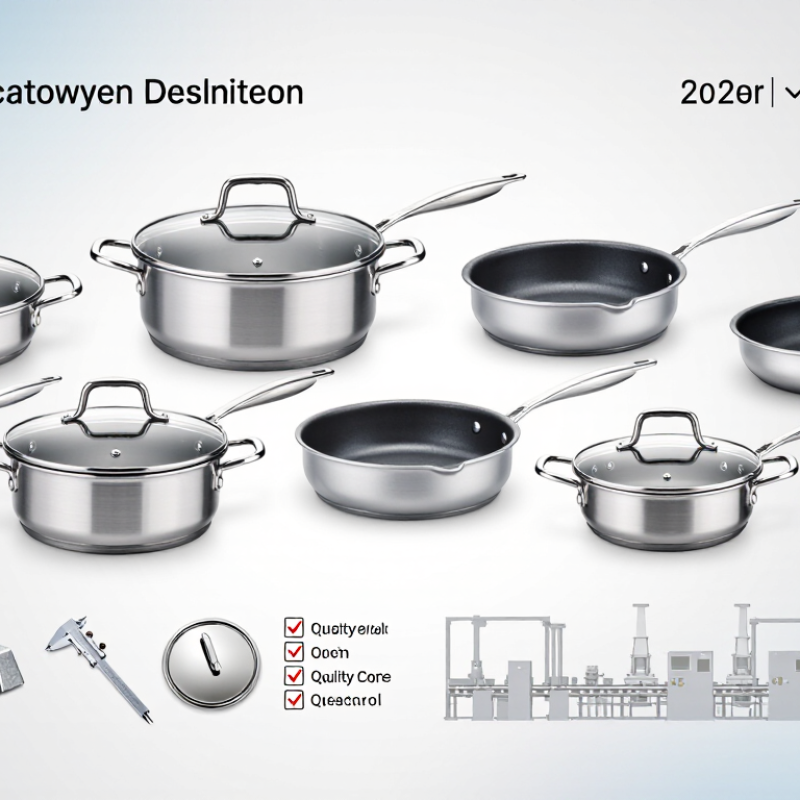
Tri-ply kadhai cookware uses three bonded metal layers. The inner surface is usually food-grade stainless steel. A thick aluminum core sits between the steel layers. This core spreads heat across the base and lower walls. The outer layer often uses magnetic stainless steel for induction compatibility.
In daily cooking, this construction can reduce hot spots during frying, sautéing, and simmering. The deep, rounded shape supports generous portions and easier stirring. Stainless steel resists staining and does not require seasoning. However, tri-ply does not make a pan completely nonstick. Food may stick if the heat is too high or oil is added too late. That detail is easy to overlook. Buyers should inspect layer bonding, wall thickness, handle attachment, lid fit, and base flatness. Reliable suppliers should provide material specifications, heat testing records, and food-contact documentation for the target market.
Tips: Warm the kadhai gradually, then add oil before delicate ingredients. Use medium heat for most cooking. Check the handle rivets for movement after repeated use. A slightly uneven base can worsen on glass cooktops. Ask for sample testing before placing a large order. In my experience, polished surfaces look attractive, but brushed finishes often hide small scratches better. No pan is perfect. Door-to-door freight, packaging strength, and inspection terms also deserve careful review.
A typical tri-ply kadhai combines a food-safe stainless-steel cooking surface, a highly conductive aluminum core, and an exterior stainless-steel layer for durability and compatibility with different cooktops. The values shown are representative room-temperature thermal conductivity figures for commonly used material grades and may vary with alloy and temperature.
When comparing China’s top 10 tri-ply kadhai manufacturers, product quality should guide the shortlist. A reliable supplier explains each layer clearly, including stainless steel, aluminum, and the inner cooking surface. Ask for steel grades, wall thickness, heat-distribution test results, and welding details. Request samples before placing a large order. Check whether the kadhai heats evenly on gas, induction, or electric stoves. Small details matter, such as a balanced handle, smooth rim, secure lid, and stable base.
Factory capability is equally important. Review production equipment, inspection procedures, worker training, and batch traceability. A professional manufacturer should provide food-contact documents, material reports, and practical export records. Confirm monthly capacity, minimum order quantities, lead times, packaging strength, and replacement policies. Photos are useful, but they are not proof. A polished factory tour can still hide inconsistent polishing or weak carton protection. That risk deserves honest attention.
Tips: Compare identical sample specifications. Measure thickness with a gauge, inspect the inner surface under bright light, and test the handle after repeated heating. Ask for a written quality checklist and pre-shipment inspection terms. Clarify every tolerance before production starts. Do not choose only by price. Very low pricing may reflect thinner materials, rushed finishing, or weaker packaging. A supplier that answers slowly during sampling may create larger communication problems later. Personally, I would keep a scoring sheet, although real production can still expose details that paperwork misses.
| Rank | Anonymous Supplier Profile | Primary Manufacturing Strength | Typical Tri-Ply Structure | Common Kadhai Sizes | Handle & Lid Options | Indicative MOQ | Typical Production Lead Time | Export Documentation Readiness | Recommended Verification | Buyer Evaluation Score |
|---|---|---|---|---|---|---|---|---|---|---|
| 1 | Supplier Profile 01 | High-volume stainless-steel cookware production | Stainless steel interior and exterior with an aluminium heat-conducting core | 20–36 cm diameter; approximately 2–8 L capacity | Riveted handles; tempered-glass or stainless-steel lids | 500–1,000 units | 30–45 days after sample approval | Commercial invoice, packing list and certificate-of-origin support | Material certificates, wall-thickness report and factory audit | 94/100 |
| 2 | Supplier Profile 02 | Deep-drawing and polished cookware manufacturing | Three-layer bonded body designed for improved heat distribution | 22–32 cm diameter; approximately 2.5–6 L capacity | Stay-cool side handles; optional glass lid | 300–800 units | 35–50 days | Standard export files available; destination requirements to be confirmed | Bonding integrity, induction test and food-contact documents | 92/100 |
| 3 | Supplier Profile 03 | Private-label cookware and gift-set production | Stainless-steel layers with a concealed aluminium core | 18–30 cm diameter; approximately 1.5–5 L capacity | Multiple handle shapes; gift packaging available | 500–1,500 units | 40–55 days | Packaging specifications and export labeling can be customized | Packaging drop test, logo approval and pre-shipment inspection | 90/100 |
| 4 | Supplier Profile 04 | Induction-compatible stainless cookware | Tri-ply body with a magnetic stainless-steel outer layer | 20–34 cm diameter; approximately 2–7 L capacity | Welded or riveted handles; stainless-steel lid option | 500–1,000 units | 35–50 days | Basic export documentation; compliance testing may be separate | Induction performance, flatness and thermal-cycle testing | 89/100 |
| 5 | Supplier Profile 05 | Cost-efficient standard cookware production | Stainless-steel inner and outer surfaces with aluminium core | 20–32 cm diameter; approximately 2–6 L capacity | Standard riveted handles; universal lid sizing | 1,000–2,000 units | 30–45 days | Standard commercial and shipping documents | Random inspection, polishing quality and dimensional tolerance | 87/100 |
| 6 | Supplier Profile 06 | Small and medium batch customized production | Bonded three-layer construction with configurable gauges | 18–36 cm diameter; approximately 1.5–8 L capacity | Custom handles, knobs and lid finishes | 200–500 units | 45–60 days | Documentation depends on order specification and market | Prototype approval, tolerance sheet and production sample retention | 85/100 |
| 7 | Supplier Profile 07 | Commercial kitchen and heavy-duty cookware | Heavy-gauge tri-ply body for frequent-use applications | 24–40 cm diameter; approximately 4–12 L capacity | Reinforced handles; commercial stainless-steel lids | 300–800 units | 40–55 days | Commercial export documents generally available | Load testing, handle strength and repeated-heating test | 84/100 |
| 8 | Supplier Profile 08 | Polished presentation cookware and retail packaging | Standard three-layer body with decorative exterior finishing | 20–30 cm diameter; approximately 2–5 L capacity | Mirror-polished handles; glass lid with steam vent | 500–1,500 units | 40–60 days | Retail packaging and labeling support available | Surface finish, lid fit and packaging compliance | 82/100 |
| 9 | Supplier Profile 09 | OEM cookware with flexible component sourcing | Three-layer construction with selectable steel grades and core thickness | 18–34 cm diameter; approximately 1.5–7 L capacity | Several handle materials; lid and insert options | 500–1,000 units | 45–65 days | Buyer-specific document checklist recommended | Steel grade verification, supplier traceability and final inspection | 80/100 |
| 10 | Supplier Profile 10 | Entry-level tri-ply cookware and promotional orders | Standard bonded stainless-steel and aluminium three-layer body | 16–30 cm diameter; approximately 1–5 L capacity | Standard handles; basic glass-lid configuration | 1,000–3,000 units | 30–45 days | Core shipping documents available for confirmed orders | Pre-production sample, product safety review and loading inspection | 78/100 |
Note: Ranks and scores are buyer-side evaluation benchmarks for anonymous supplier profiles, not claims about specific companies. MOQ, lead time, materials, certifications and export documents should be confirmed in writing before purchase.
China’s leading ten tri-ply kadhai manufacturers serve cookware importers, restaurant suppliers, and private-label retailers worldwide. Their products usually combine stainless steel layers with an aluminum core for faster, more even heating. A well-made kadhai should feel balanced when lifted, not awkwardly heavy. Its rounded interior should release food without trapping oil around the edges. Small details matter.
Experienced buyers inspect more than polished photographs. They request material grades, thickness data, handle-load tests, and sample measurements. They also check whether the base remains flat after repeated heating and cooling. Reliable factories provide traceable production records and practical food-contact documentation. Some offer laser marking, induction-compatible bases, riveted handles, or customized cartons. Communication quality is another useful signal. Slow, unclear answers may create bigger problems during mass production.
No shortlist is flawless. A factory with excellent welding may have weaker packaging control. Another may offer competitive pricing but inconsistent polishing between batches. I would compare at least three samples from different production dates. Check the lid fit, weld points, rim smoothness, and surface uniformity under bright light. Ask for a pre-shipment inspection, even when previous orders were successful. Certification claims should be verified through current documents, not attractive sales language. This extra work feels inconvenient. It often prevents costly returns, delayed shipments, and disappointed customers.
China Top 10 Tri Ply Kadhai Manufacturers for Global Buyers
Reliable tri-ply kadhai production begins with traceable materials, not attractive showroom samples. Manufacturers should identify stainless steel grades, aluminum core thickness, and magnetic outer layers. Food-contact surfaces need smooth polishing, clean welds, and no sharp rim defects. Experienced buyers should request material certificates for every production batch. Look inside, too.
Quality systems commonly include incoming inspection, in-process checks, and final sampling. Factories operating under ISO 9001 can provide clearer procedures, though certification alone cannot guarantee product quality. Buyers should verify certificate validity and issuing bodies. Testing may cover chemical migration, heat resistance, handle strength, flatness, and coating performance where applicable. Records matter.
A dependable supplier uses calibrated gauges and keeps inspection photographs, packing records, and batch numbers. Random sampling should examine wall thickness, lid fit, base bonding, and surface scratches under strong light. Packaging tests are also practical because dents often appear after factory approval. No factory is perfect. Small inconsistencies can still occur, especially during peak production. A useful audit should review corrective-action records, not only pass certificates. Independent laboratory reports can strengthen confidence when local and destination-market requirements differ. Claims should match evidence. That point is often missed.
China’s top 10 tri-ply kadhai manufacturers should be compared through pricing, materials, and export reliability. A low factory quote may exclude lids, packaging, inspection, or freight. Request a detailed price sheet for each size, such as 2, 3, and 5 liters. Confirm whether prices use stainless steel, aluminum, or recycled metal layers. Small differences affect heating speed, weight, and long-term durability.
Customization can include handles, lid design, polishing, engraving, color boxes, and retail labels. Ask about minimum order quantities before approving artwork. A useful specification should state thickness, base diameter, capacity tolerance, and cooking-surface finish. Request samples from the same production line. Photos are not enough. Sometimes, a perfect sample hides uneven polishing in mass production.
Export service deserves equal attention. Reliable suppliers should provide commercial invoices, packing lists, carton details, and shipping support. Confirm export packaging with drop-test expectations and moisture protection. Independent pre-shipment inspection can check quantity, dimensions, scratches, welds, and lid fitting. Compare FOB, CIF, and landed costs rather than unit price alone. Payment terms, production lead time, and replacement policies should be written clearly. Some suppliers respond quickly before payment, then communicate slowly. That risk deserves attention. A buyer should also verify factory capacity, worker safety practices, food-contact material documentation, and destination-market requirements before placing a large order.
Most designs combine stainless steel outer layers with an aluminum core. The core spreads heat faster and reduces hot spots.
Lift the sample and check its balance. The rounded interior should feel smooth, without oil-trapping corners. Inspect the rim, welds, and handles under bright light.
Request material certificates, thickness data, and food-contact documentation. Ask for current certification records and verify the issuing bodies. Sales claims alone are not enough.
Useful tests include handle-load checks, heat cycling, flatness testing, and surface inspection. Test the lid fit. The base should remain flat after repeated heating and cooling.
Compare at least three samples from different production dates. Measure wall thickness, inspect polishing, and check base bonding. Small batch differences can reveal future production problems.
No. A quality certificate shows documented procedures, not perfect products. Review inspection records, corrective actions, and recent batch evidence. Certificates need verification.
Inspect cartons, protective materials, and packing records before shipment. Packaging tests can reveal dent risks after factory approval. A polished sample means little if the carton fails.
Yes, especially for large or private-label orders. Inspect handles, rims, scratches, measurements, and carton condition. Previous success is not proof. I would still request inspection.
This guide introduces Tri-Ply Kadhai cookware, explaining how its bonded layers combine strength, even heat distribution, corrosion resistance, and practical cooking performance. It outlines the main factors global buyers should consider when evaluating Chinese manufacturers, including material quality, production capacity, technical expertise, product consistency, factory experience, and communication efficiency. Buyers will also learn how to compare suppliers based on design capability, tooling support, sample development, and their ability to meet different market requirements.
The article reviews ten leading categories of Chinese manufacturing suppliers without focusing on any specific brand, while highlighting the importance of manufacturing standards, certifications, inspections, and quality-control procedures. It also discusses pricing structures, customization options, packaging, order quantities, export documentation, shipping coordination, and after-sales support. By considering these factors together, importers, distributors, and retailers can make more informed sourcing decisions and select reliable partners for durable, safe, and market-ready Tri-Ply Kadhai products.