
Call: +91-9830320177
Dealer Enquiry
In the rapidly evolving global commercial kitchen supply chain, procurement directors, commercial cookware importers, and hotel equipment distributors face severe demands for material durability, thermal efficiency, and regulatory compliance. Selecting the right Heavy Duty Stainless Steel Saucepot Manufacturer in China requires moving beyond superficial pricing metrics to conduct rigorous evaluations of metallurgical integrity, bottom encapsulation techniques, structural welding standards, and factory compliance frameworks.
As commercial kitchens migrate from traditional open-flame burners to high-wattage commercial induction ranges, the mechanical construction of heavy-duty saucepots must adapt. Modern industrial saucepots and pressure cookers must withstand extreme thermal shocks, continuous mechanical scraping, high-acid food contact environments, and harsh commercial dishwasher cycles without delamination, pitting, or structural warping.
Explore our flagship heavy-duty commercial cookware lineup engineered for hotels, restaurants, industrial catering units, and OEM global brands. Each model integrates advanced pressure-encapsulation technology, ergonomic stay-cool handles, and heavy-gauge stainless steel construction.
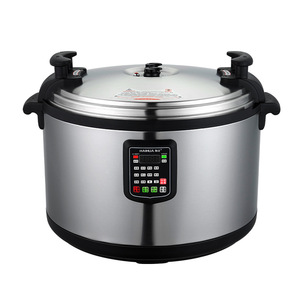
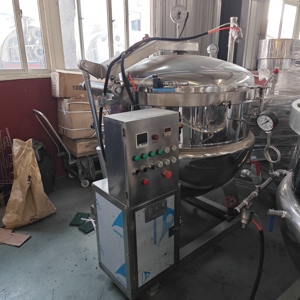
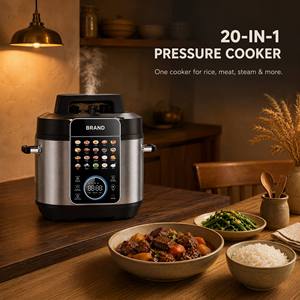
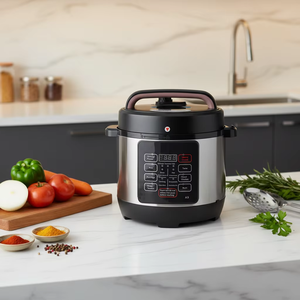
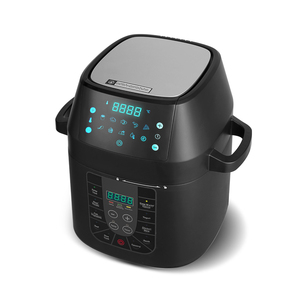
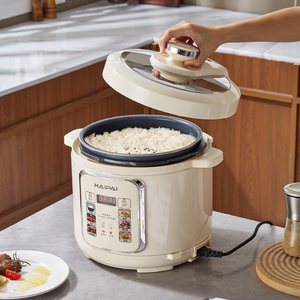
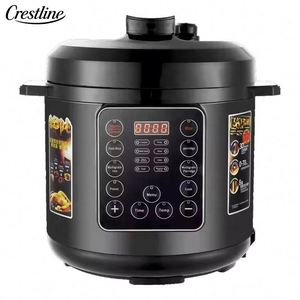
The operational lifespan of a commercial saucepot in high-volume hospitality environments depends primarily on two engineering factors: Steel Alloy Selection and Base Capsule Bonding Integrity.
Standard retail saucepots frequently utilize lower-cost AISI 201 stainless steel, which contains higher manganese content and reduced nickel levels. While visually similar, 201 grade steel experiences rapid intergranular corrosion, pitting, and stress rusting when exposed to acidic food products (such as tomato-based sauces, vinegars, and heavy brine) at elevated simmering temperatures.
Premium Chinese heavy-duty saucepot manufacturers utilize certified AISI 304 (18/8 or 18/10 Chromium-Nickel ratio) as the baseline material for vessel bodies. The 10% nickel content stabilizes the austenitic structure, providing exceptional resistance to chemical corrosion and structural oxidation. For specialized chemical or ultra-high-salinity commercial applications, AISI 316 steel (incorporating 2-3% Molybdenum) is deployed to prevent chloride-induced pitting.
Because austenitic stainless steel has relatively low thermal conductivity (approx. 15 W/m·K compared to copper's 400 W/m·K), bare single-ply saucepots suffer from severe localized hot-spots, causing food scorching and uneven liquid thermal convection. To solve this, leading factories apply high-tonnage Friction Impact Bonding.
| Layer Architecture | Material Specification | Thickness Range | Primary Functional Benefit |
|---|---|---|---|
| Inner Layer (Food Contact) | AISI 304 (18/10) Stainless Steel | 0.8mm - 1.2mm | Non-reactive, hygienic, scratch-resistant surface. |
| Core Heat Spreader | Pure 1050/1100 Aluminium Disc | 4.0mm - 6.0mm | Rapid lateral thermal distribution; eliminates hot-spots. |
| Outer Base Disc | AISI 430 Ferritic Stainless Steel | 0.6mm - 0.8mm | High magnetic permeability for 100% commercial induction compatibility. |
During the impact bonding process, a hydraulic press exerting between 2,000 to 3,500 tons of force instantly fuses the aluminium core between the 304 body and the 430 magnetic bottom at temperatures approaching 500°C without adhesives or brazing flux. This ensures zero air gaps, preventing encapsulated bottom separation under thermal stress shocks.
Utilizing high-precision hydraulic deep-drawing machinery ensures uniform wall thickness across pot corners, preventing localized wall thinning and boosting structural rigidity against heavy mechanical impacts.
Commercial handles are multi-point spot welded using high-frequency capacitive discharge equipment. Hollow stainless steel tubular design reduces thermal conduction, keeping handles cool while enduring 150kg+ shear stress loads.
Saucepot rims are processed with a specialized double-turned roll edge. This structural lip provides 360-degree drip-free pouring while preventing pot deformation when heavy commercial lids are slammed into position.
Building upon over 40 years of manufacturing experience, top-tier Chinese stainless steel cookware manufacturers have transitioned from low-cost manual workshops into fully automated, ISO-certified smart production facilities. When sourcing heavy-duty saucepots and pressure cookers for global distribution, top enterprise suppliers provide significant structural advantages:
From direct stainless steel coil slitting and automated deep-drawing to robot-arm mirror polishing and impact bottom bonding, top Chinese factories manage the complete manufacturing pipeline in-house. This minimizes raw material scrap, guarantees consistent surface finishing, and provides direct control over batch quality.
Leading saucepot factories maintain full compliance with international food contact regulations including EU LFGB, US FDA (GRAS standard), French DGCCRF, and ISO 9001:2015 quality management systems. Every heat batch undergoes spectrographic alloy composition testing, salt-spray anti-corrosion trials, and drop-impact destruction testing.
Global procurement teams must align their supply chain strategies with incoming technical and environmental shifts. Over the next decade, five core trends will reshape how commercial saucepots and pressure cookers are manufactured, sourced, and imported:
European and North American importers are increasingly subjected to carbon tariff accounting (such as CBAM). Leading Chinese saucepot factories are integrating solar micro-grids, closed-loop water filtration, and zero-emission electric annealing furnaces to offer low-carbon certified cookware.
With gas bans expanding in modern commercial kitchens across Europe and North America, saucepots are being redesigned with wider magnetic contact bases. Full-disc encapsulated bottoms maximize energy conversion ratios, reducing boiling time by up to 28% compared to standard gas-optimized pots.
Enterprise hotel chains and commercial leasing firms are beginning to request embedded laser-etched matrix barcodes and high-temperature RFID chips in saucepot bases. This enables automated inventory management, tracking pot usage cycles and commercial washing counts.
Elevate your product catalog with certified heavy-duty stainless steel saucepots, commercial stockpots, and multi-function pressure cookers. Our engineering team provides end-to-end OEM/ODM support, custom tooling, rapid prototyping, and competitive direct-from-factory pricing.
Send an Inquiry