
Call: +91-9830320177
Dealer Enquiry
Engineered for commercial kitchens, central catering hubs, mass dining halls, and international distributors. High-grade metallurgical construction certified to international food contact standards.
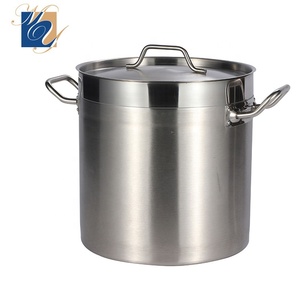
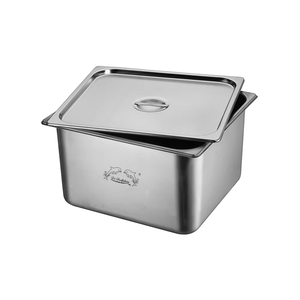
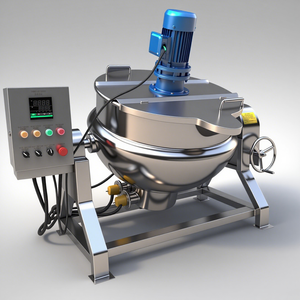
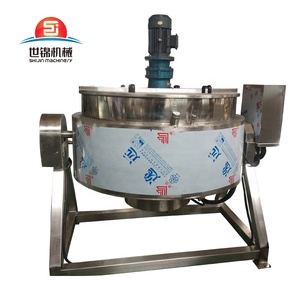
The global commercial catering equipment market is undergoing a profound structural evolution. Driven by the expansion of central kitchens, commercial hotel chains, airline catering services, and mass institutional dining, the demand for high-performance, heavy-gauge cookware has scaled exponentially. For B2B procurement officers, global restaurant equipment brands, and wholesale importers, China remains the unquestioned epicenter of commercial cookware manufacturing and export excellence.
However, navigating China’s industrial cookware manufacturing ecosystem requires deep technical discernment. A supplier’s capability is defined not merely by output volume, but by metallurgical integrity, deep-drawing precision, robotic TIG welding consistency, and strict compliance with international food-contact safety standards (including FDA 21 CFR 175.300, EU LFGB Regulation EC No 1935/2004, and ISO 9001:2015 quality frameworks).
In high-intensity commercial environments, residential-grade cookware fails rapidly. Thermal stress, mechanical impact from commercial dishwashers, and continuous exposure to acidic broths lead to severe warping, pitting corrosion, and structural delamination in inferior products. Leading Chinese export manufacturers utilize specialized heavy-gauge alloys, such as 3003 Commercial Aluminum Alloy for extreme thermal conductivity and AISI 304 (18/8) / AISI 316 Austenitic Stainless Steel for superior corrosion resistance.
Key technological transitions transforming bulk food preparation, central kitchen efficiency, and B2B sourcing strategies.
With energy costs rising globally, commercial kitchens are transitioning rapidly from open gas flames to high-power commercial induction ranges (10kW–15kW). Future procurement mandates cookware built with impact-bonded 3-ply sandwich bottoms (SS304 + 5mm Pure Aluminum Core + SS430 Ferritic Steel), reducing heating cycles by 35% while eliminating scorching hotspots.
Central food factories and mass caterers are replacing manual stock pots with automated jacketed kettle systems. Outfitted with motorized planetary PTFE scrapers, steam/thermal oil heating jackets, and digital tilt mechanisms, these systems allow single operators to process up to 500 liters of soup or sauce with consistent viscosity and zero manual labor overhead.
Global food safety regulations (notably EU REACH bans on fluorinated compounds) are rendering traditional PTFE non-stick coatings obsolete in commercial settings. Importers are turning toward hard-anodized commercial aluminum (which creates a diamond-hard aluminum oxide surface layer) and mirror-electropolished SS304 surfaces that offer natural release properties without chemical degradation.
A rigorous engineering breakdown comparing primary commercial cookware metals across structural, thermal, and economic metrics.
| Material Specification | Thermal Conductivity (W/m·K) | Tensile Strength (MPa) | Induction Compatible | Corrosion & Acid Resistance | Target Commercial Application |
|---|---|---|---|---|---|
| AISI 304 Stainless Steel (18/8) | 16.2 W/m·K | 515 MPa | Via SS430 Base | Excellent | Stock pots, GN Food Pans, Hygienic Storage |
| Commercial Aluminum 3003 Alloy | 160.0 W/m·K | 140 MPa | No (Gas/Electric Only) | Moderate (Acid Sensitive) | Heavy-Duty Commercial Pressure Cookers, Fry Pans |
| Hard-Anodized Aluminum | 130.0 W/m·K | 310 MPa | With Steel Disc | Superior | High-Wear Sauté Pans, Heavy Commercial Tawas |
| Tri-Ply Composite (SS304-Alu-SS430) | 120.0 W/m·K | 480 MPa | Direct Induction | Superior | High-Performance Hotel Kitchens, Rapid Heating Saucepan |
| Carbon Steel / Cast Iron | 50.0 W/m·K | 370 MPa | Direct Induction | Low (Requires Seasoning) | High-Heat Commercial Woks, Griddles, Flat Tops |
When selecting an OEM/ODM manufacturing partner in China, procurement teams must look beyond superficial pricing and evaluate raw manufacturing capability, engineering heritage, and supply chain scalability.
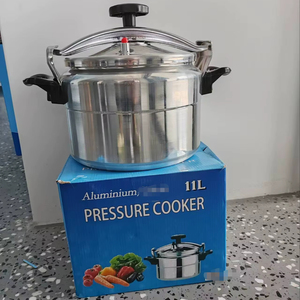
Industrial stock pots and large-capacity commercial pressure cookers (11L to 50L) require deep-drawing hydraulic presses exceeding 1,000 to 2,500 tons of force. Superior factories utilize multi-stage drawing with intermediate annealing to prevent micro-fractures in the metallic grain structure, guaranteeing structural stability under high operational pressure.
For double-bottom stainless steel cookware, impact bonding is the gold standard. Under pressures of 2,000+ tons at 500°C temperatures, the stainless steel body, pure aluminum thermal distribution core, and magnetic base plate fuse at a molecular level. Unlike cheap brazed bottoms that suffer from air gaps and eventual base detachment, impact-bonded cookware guarantees lifetime thermal transfer integrity.
Top-tier exporters maintain in-house tooling workshops capable of developing custom mold geometries, specialized lid seal profiles, custom logo laser-etching, and bespoke Gastronorm pan dimensions within rapid 15-day prototyping windows.
Combining over 40 years of metallurgical heritage with state-of-the-art automated manufacturing infrastructure.
Established in 1985, our manufacturing facilities have pioneered commercial cookware production. With deep roots in pressure vessel safety and heavy-gauge sheet metal forming, we serve global buyers across 50+ countries.
Every commercial pressure cooker and industrial kettle undergoes 100% hydrostatic pressure testing, ultrasonic wall thickness verification, and non-destructive weld inspection to guarantee zero defect delivery.
We bridge the gap between mass industrial output and specialized custom branding. Supporting flexible Minimum Order Quantities (MOQ) and 15-day sample delivery for OEM brand customization and custom packaging.
Outfitted with automated robotic arm polishing, continuous TIG orbital welding lines, and automated hydraulic pressing bays, guaranteeing pinpoint dimensional tolerances across million-unit production runs.
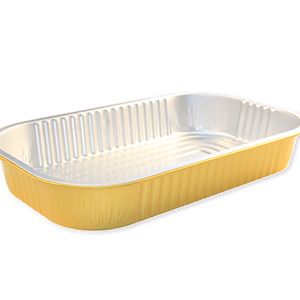
Full production capability for full-size GN 1/1, 1/2, 1/3, 2/3 stainless steel pans and recyclable heavy-foil containers, engineered to precise European EN 631 standards for seamless kitchen integration.
Full export documentation support including Form E, Certificate of Origin, FDA Compliance declarations, and DDP/FOB/CIF freight optimization for distributors in North America, Europe, Middle East, and Asia-Pacific.
Detailed answers to technical, logistical, and commercial inquiries commonly raised by importers, procurement officers, and catering distributors.
The choice depends on cooking style and heating source. Commercial Aluminum 3003 offers unmatched thermal conductivity (160 W/m·K), heating up rapidly and preventing hot spots for dry cooking or quick boiling on gas burners. However, SS304 (18/8 Stainless Steel) is essential for acidic foods (tomatoes, vinegar, wine sauces) as it is totally non-reactive. For maximum versatility, tri-ply stainless steel with an aluminum core provides the best of both worlds.
For European Union markets, pressure cookers must comply with the Pressure Equipment Directive (PED 2014/68/EU) and bear the CE mark, alongside LFGB food contact testing. For North America, compliance with UL/NSF standards or ASTM pressure vessel guidelines is recommended. In India, ISI (IS 2347) certification is mandatory. Our factory provides full testing documentation for smooth customs clearance.
Impact bonding uses high-pressure hydraulic forging (2,000+ tons) to bond the stainless steel vessel, heavy aluminum disc, and magnetic steel plate together at near-melting temperatures without flux or solder. This eliminates air pockets completely, ensuring 100% uniform heat distribution, preventing base warping on 15kW induction cookers, and guaranteeing the bottom will never detach over decades of commercial abuse.
For standard catalog products, our base MOQ starts at 200–500 units per item. For full OEM customization (custom laser logo, customized handle tooling, color packaging), MOQ ranges between 500–1,000 units depending on vessel size. Standard mass production lead time is 30 to 40 days following sample sign-off and deposit receipt.
Industrial jacketed kettles (such as our 300L TST-EJK300L) do not heat the food container directly with open flame. Instead, steam or thermal oil circulates between an outer and inner steel jacket, distributing indirect heat evenly across the entire hemisphere. Paired with a continuous planetary PTFE scraping stirrer, thick sauces and milk-based products move constantly across the wall without scorching.
When GN pans are nested together after commercial dishwashing, vacuum locking can make separation difficult. Premium GN pans incorporate engineered anti-jamming shoulder ridges along the upper rim perimeter. This keeps a precise micro-gap between stacked pans, allowing kitchen staff to pull individual pans effortlessly while preserving rim flatness.
Yes, cookware fabricated from AISI 304/316 Stainless Steel or Hard-Anodized Aluminum is fully resilient against high-temperature (85°C+) commercial dishwashing cycles and heavy alkaline sanitizer chemistry. Standard raw aluminum cookware, however, should be hand-washed or sanitized with pH-neutral agents to prevent surface oxidation darkening.
Our Quality Assurance lab utilizes Optical Emission Spectrometers (OES) to test raw metal ingots and sheet coils, verifying exact nickel, chromium, and aluminum purity before stamping. During deep drawing, ultrasonic thickness gauges measure side-wall draw ratios to ensure critical pressure points maintain structural thickness specs.
Partner direct with China's leading commercial cookware manufacturer. Request a comprehensive product catalog, OEM price matrix, or factory audit dossier today.