
Call: +91-9830320177
Dealer Enquiry
Engineered for commercial kitchens, hospitality enterprises, and global retailers. Featuring food-grade silicone seals, non-stick interior pots, intelligent micro-pressure technology, and high thermal efficiency.
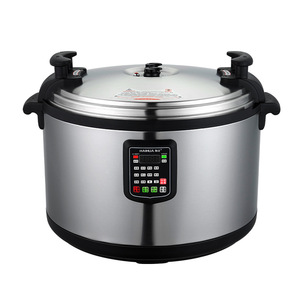 Commercial Grade
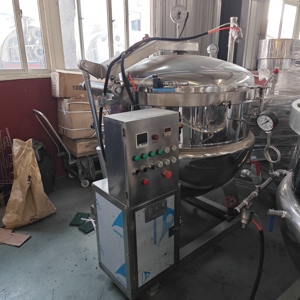 Industrial Series
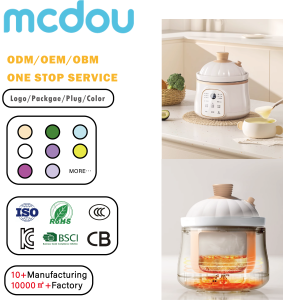 Smart Digital
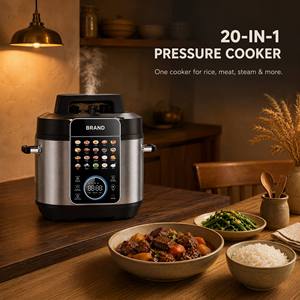 20-in-1 Multi-Pot
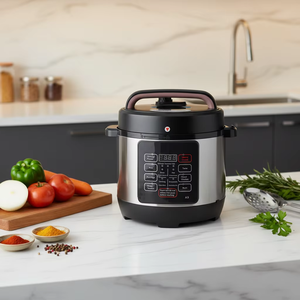 Hotel Special
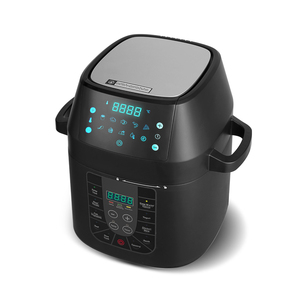 OEM Favorite
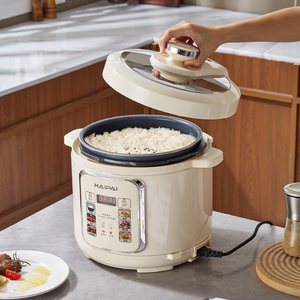 Global Bestseller
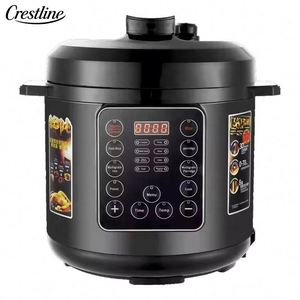 High Power
Over the past decade, China has solidified its status as the world’s preeminent manufacturing hub for silicone non-stick cooking utensils, multi-cooker accessories, and high-performance cookware. Global procurement managers, brand owners, and commercial importers increasingly rely on Chinese ODM/OEM partners not merely for cost efficiencies, but for cutting-edge polymer engineering, precision toolmaking, and rigorous international quality compliance.
Modern silicone kitchen tools—ranging from spatulas, turners, and tongs to high-pressure cooker silicone gaskets and non-stick pot liners—have undergone a material revolution. The industry transition from conventional peroxide-cured rubber to Platinum-Cured Liquid Silicone Rubber (LSR) has redefined heat stability, chemical inertness, and non-stick safety standards across global consumer markets.
Understanding raw material selection is critical for global buyers focused on quality assurance and extended product lifespan. The table below highlights the performance differential between premium Liquid Silicone Rubber (LSR) and standard solid silicone in kitchenware applications:
| Performance Parameter | Liquid Silicone Rubber (LSR) | High-Temperature Vulcanized (HTV) Solid Silicone |
|---|---|---|
| Curing Agent | Platinum Catalyst (No Byproducts) | Peroxide Catalyst (Requires Post-Baking) |
| Continuous Heat Rating | -40°C to +260°C (-40°F to +500°F) | -20°C to +200°C (-4°F to +392°F) |
| Odor & Volatiles | Zero Odor / Ultra-Low Volatiles | Slight Initial Odor (Needs Degassing) |
| Tensile & Tear Strength | Superior (High Elastic Memory) | Moderate (Prone to Micro-tears under flex) |
| Food Contact Compliance | Exceeds EU LFGB & US FDA 21 CFR | Meets Basic FDA (LFGB requires extra processing) |
Top Chinese exporters utilize fully automated injection molding machines within ISO Class 8 cleanroom environments. This guarantees that silicone spatulas, cookware guards, and sealing rings retain absolute structural integrity, resisting color discoloration, degradation, or chemical leaching even when exposed to boiling oils and acidic food ingredients.
From in-house mold design and dual-injection stainless steel co-molding to stringent AQL 1.0 quality audits, Chinese export leaders provide unparalleled supply chain resilience.
Premium non-stick silicone utensils require structural rigidity. Top manufacturers integrate full 304/430 stainless steel inner skeletons via multi-shot injection, ensuring utensils will not bend, break, or flex under heavy commercial use.
Leading exporters undergo rigorous third-party auditing by SGS, TÜV Rheinland, and Intertek. Products comply fully with EU Regulation (EC) No 1935/2004, German LFGB §30/31, French DGCCRF, and US FDA standards.
With high-precision CNC machining centers and 3D silicone printing tools, custom utensil designs progress from CAD blueprints to physical samples in under 7 business days, dramatically accelerating market launch cycles.
As consumer preference shifts toward non-toxic, eco-conscious, and multifunctional kitchen gadgets, purchasing directors must adapt their supply chain strategy. The following key trends are re-shaping the China-to-global export landscape:
Comprehensive answers to crucial engineering, compliance, and logistics queries for international importers, wholesale buyers, and brand managers.
High-grade manufacturers employ platinum curing combined with prolonged secondary vulcanization (baking at 200°C for 4 to 6 hours). This process completely evaporates residual volatile organic compounds (VOCs) and siloxanes, yielding completely odorless, food-safe utensils that pass German LFGB testing.
Yes. Premium food-grade silicone maintains operational stability up to 250°C (482°F) continuously and short-term exposure up to 300°C (572°F). Unlike nylon or plastic utensils, high-grade silicone will not melt, warp, or leach toxic fumes into hot cooking oils.
For custom Pantone color matching, standard factory MOQs typically range from 1,000 to 3,000 sets per item. For stock colors (Black, Slate Gray, Cherry Red), MOQs can be as low as 500 units per item, enabling flexible testing for new product lines.
Silicone exhibits a low Shore A durometer hardness (typically 60 to 70 Shore A), making it significantly softer than PTFE, ceramic, or anodized non-stick coatings. Using silicone tools prevents surface micro-scratches, extending the operational lifespan of commercial pressure cooker liners by up to 300%.
Tooling design and steel mold fabrication take approximately 15 to 25 days. Once the steel mold is validated, initial T1 sample production takes 3 to 5 days, followed by mass production cycles of 20 to 30 days depending on order volume.
Standard low-cost silicone can absorb food pigments over time. However, top exporters apply a specialized hydrophobic surface treatment or employ high-density platinum-cured liquid silicone, which dramatically increases stain resistance and prevents oil absorption.
Leading factories inspect products under ISO 2859-1 (AQL 1.0 for Major Defects, AQL 2.5 for Minor Defects). Inspection routines include high-temp stress testing, tensile pull tests on metal-to-silicone bonded joints, dishwasher endurance tests, and dimensional tolerance checks.
Yes. Turnkey OEM/ODM suppliers provide consolidated container loading (FCL/LCL), packing electric multi-cookers, non-stick pots, and silicone utensil accessory kits together to optimize ocean freight rates and lower landed unit costs.
Accelerate your procurement pipeline with factory-direct pricing, certified food-grade materials, custom OEM tooling, and dedicated export logistics management.