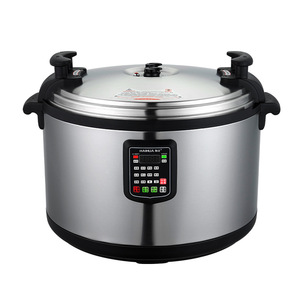
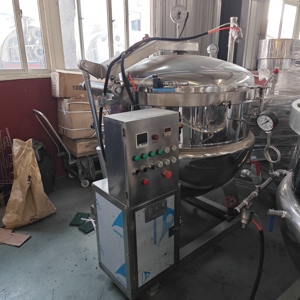
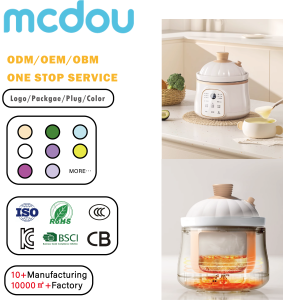
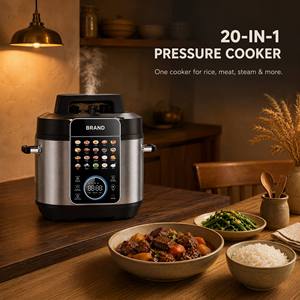
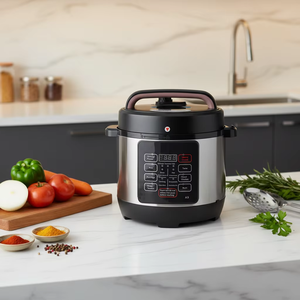
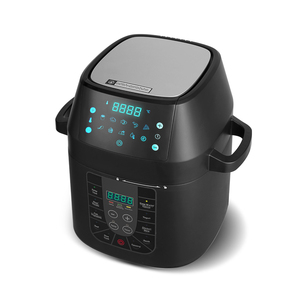
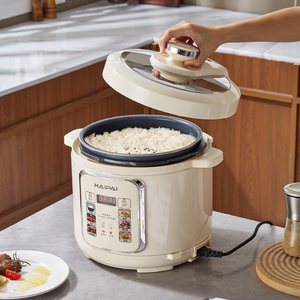
In global kitchenware procurement, sourcing high-performing non-stick fry pans, cookware sets, and commercial electric multi-cookers requires a granular understanding of substrate metallurgy, fluoropolymer polymer chemistry, and automated spray applicator systems. As leading non-stick fry pan factories and international exporters, maintaining high production tolerances while maintaining price efficiency is the cornerstone of sustainable supply chain partnerships.
Key Takeaway for B2B Importers: Non-stick cookware longevity is determined not merely by the top coating layer, but by substrate mechanical keying (sandblasting roughing), ceramic-reinforced primer coats, and dry-film thickness (DFT) uniformity across the entire cooking vessel curvature.
Modern non-stick fry pan manufacturing utilizes three principal substrate materials: Heavy-Gauge Forged Aluminium (AA3003/AA3004), High-Pressure Die-Cast Aluminium, and 3-Ply Clad Stainless Steel (SUS304-Aluminium Core-SUS430). Aluminum substrates are preferred in commercial and retail environments due to their exceptional thermal conductivity ($k \approx 205 \text{ W/m}\cdot\text{K}$), which minimizes localized thermal hotspots that induce coating thermal degradation and food scorching.
Prior to coating application, factory quality protocols mandate severe chemical degreasing followed by high-velocity shot peening or micro-sandblasting. This process transforms smooth metal surfaces into micro-textured topographies with an average roughness ($R_a$) of $3.5 - 5.0 \, \mu\text{m}$. This mechanical keying establishes anchor points that prevent coating delamination during intense thermal cycling tests ($260^\circ\text{C}$ quenching cycles).
2. Coating Physics: PTFE vs. Ceramic (Sol-Gel) Matrix Evaluation
Wholesale buyers must navigate the distinct physical characteristics of Polytetrafluoroethylene (PTFE) systems and Ceramic Sol-Gel inorganic coatings to align with regional consumer preferences and regulatory frameworks.
Performance Metrics
Multi-Layer Reinforced PTFE
Ceramic Sol-Gel (Silica-Based)
Hard-Anodized Fluoropolymer
Non-Stick Contact Angle
110° - 118° (Superior Release)
95° - 102° (Moderate Release)
105° - 112° (High Release)
Max Thermal Tolerance
260°C (500°F) Continuous
400°C - 450°C (High Heat)
280°C Continuous
Abrasion Resistance (BS 7069)
> 50,000 Cycles (Granite/Titanium)
15,000 - 25,000 Cycles
> 80,000 Cycles
Chemical / Dishwasher Inertness
Exceptional (pH 1 - 14 Immune)
Moderate (Degrades in Alkaline)
High Structural Resistance
Regulatory & PFAS Status
PFOA/PFOS Free, GenX Compliant
100% PFAS-Free, PTFE-Free
PFOA/PFOS Free, Heavy Metal Free
Advanced OEM factories employ 3-coat and 4-coat fluoropolymer architectures. The **Primer Layer** contains high-temperature polyethersulfone (PES) resins mixed with titanium oxide or diamond micro-particles to bond tightly with the pre-treated metal substrate. The **Mid-Coat** incorporates hard ceramic carbides to withstand metal spatula abrasion. The **Top-Coat** delivers pure PTFE or PFA fluoropolymer particles, creating an ultra-low surface energy barrier ($\gamma < 18 \text{ mN/m}$) that prevents organic proteins and sugars from bonding.
Global Sourcing Trends & Manufacturing Compliance (2025–2030 Outlook)
The global marketplace for non-stick cookware is undergoing a structural transition driven by stringent environmental standards, consumer preference for fat-reduced cooking, and the rapid adoption of induction-compatible cookware systems across both commercial and residential sectors.
With regulatory bodies such as the European Chemicals Agency (ECHA) and the United States Environmental Protection Agency (EPA) introducing stricter limits on per- and polyfluoroalkyl substances (PFAS), Tier-1 export factories are leading the transition toward next-generation fluoropolymers. Modern PTFE formulations manufactured in certified plants are completely free of legacy surfactants such as PFOA (Perfluorooctanoic acid) and PFOS (Perfluorooctane sulfonate). Furthermore, green ceramic non-stick technologies using water-based sol-gel processes are capturing expanding shelf space in EU and North American retail networks.
As commercial kitchens migrate from traditional gas flame burners to high-efficiency magnetic induction cooktops, cookware factories must engineer flat, stable bottoms with optimal magnetic permeability. Leading exporters apply heavy stainless steel discs (SUS430 grade) to aluminum fry pan bases using two core methods:
Impact-Bonded / Friction-Welded Induction Discs: High-tonnage hydraulic presses (typically 1,500 to 3,000 tons) bond a solid SUS430 plate directly to the aluminum base under heat. This method guarantees structural integrity, preventing disc detachment or thermal warping under high commercial thermal shocks.
Perforated Punching Discs: Recessed stainless steel plates are stamped into the bottom base, creating an economical solution for high-volume retail product lines while ensuring broad compatibility across gas, electric, ceramic, and induction stoves.
Why Partner with Our Wholesale Manufacturing Plants & Export Hub
With over four decades of direct industrial manufacturing experience traced back through enterprise leaders such as Shyam Cookware and Khaitan Pressure Cookers Pvt Ltd (est. 1985), our manufacturing facilities deliver high-volume, precision-crafted kitchenware solutions for regional distributors, OEM brand owners, and multinational retail chains.
We provide comprehensive turn-key custom production services tailored to enterprise procurement requirements:
Custom Mold & Die Engineering: In-house CNC toolmaking for specialized cookware geometries, flared rim profiles, ergonomic stay-cool Bakelite or cast stainless steel handles, and custom glass lid silicone rims.
Proprietary Surface Coating Options: Choice of Whitford QuanTanium, Teflon Select, ILAG Ultimate, Greblon C3+, or eco-friendly silica ceramic finishes in custom Pantone colorways.
Private Label & Packaging Systems: Laser-etched bottom logos, customized color retail boxes, drop-test verified mail-order packaging for e-commerce brands, and bulk palletization for direct ocean container shipments.
Frequently Asked Questions for Wholesale Cookware Buyers
Below are authoritative, technical answers to key questions encountered by professional buyers, procurement heads, and importers during factory evaluation.
What is the standard Minimum Order Quantity (MOQ) for custom OEM non-stick fry pan orders?
Our standard Minimum Order Quantity (MOQ) for standard factory-spec non-stick fry pans is 1,000 units per size/color. For fully customized OEM orders involving custom logo laser etching, unique Pantone exterior enamel coatings, and branded retail color boxes, the standard MOQ is typically 2,000 to 3,000 units per batch to optimize line setup and automated spray coating efficiency.
How do your export factories ensure food safety and food contact compliance?
All non-stick coatings applied in our ISO-certified facilities undergo third-party laboratory verification (SGS, TUV, Intertek) to ensure strict compliance with US FDA 21 CFR 175.300, European Union EU 10/2011, German LFGB, and French DGCCRF standards. Our products are 100% free of PFOA, PFOS, lead, cadmium, and toxic heavy metals.
What quality control (QC) protocols are conducted before factory dispatch?
Each manufacturing lot passes a 5-stage quality audit: (1) Spectrographic raw aluminum alloy verification; (2) Dry Film Thickness (DFT) gauge measurement ensuring 25–35 microns total coating depth; (3) Cross-hatch adhesion testing (ISO 2409 / ASTM D3359); (4) Boiling saltwater corrosion bath testing (48 hours); and (5) Thermal shock stability cycles ($260^\circ\text{C}$ to room temperature water immersion).
Can you provide custom induction base designs for fast thermal transfer?
Yes, we offer both friction-bonded solid steel bottoms and high-speed perforated induction discs. Our engineering team calculates bottom disc thickness (typically 0.4mm to 3.0mm SUS430 steel) based on vessel diameter to optimize electromagnetic energy conversion while ensuring zero base warping on commercial induction ranges.
What is the typical production lead time for sea freight container orders?
Standard production turnaround for a full 20ft or 40ft High Cube container order is 30 to 45 calendar days following artwork confirmation and deposit receipt. Pre-production samples for client approval are manufactured and delivered via air courier within 7 to 10 working days.
Initiate Factory Direct Procurement & OEM Consultation
Connect with our senior export sales engineering team to request factory audit reports, technical spec sheets, sample kits, and tiered wholesale pricing structures.