
Call: +91-9830320177
Dealer Enquiry
High-efficiency, food-grade stainless steel kitchen appliances designed to meet stringent EU safety norms, optimized for Italian culinary standards.
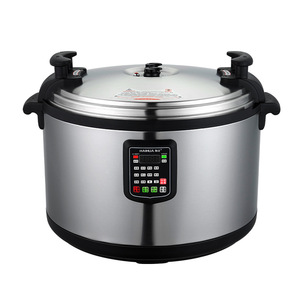
Engineered for Italian hotels, restaurants, and catering operations. Features heavy-gauge AISI 304 food-grade stainless steel with smart pressure modulation.
Inquire Now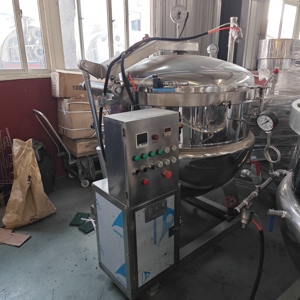
High-speed thermal transfer system optimized for braising meats, stocks, and beans. Acid-resistant interior preserves delicate Italian sauce flavors.
Inquire Now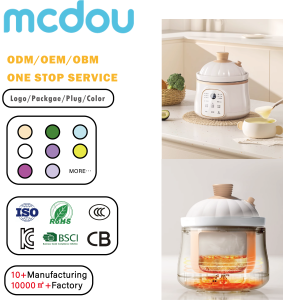
Precision micro-pressure thermal tech for slow cooking broths and baby foods. Features multi-stage digital temperature controls for refined energy management.
Inquire Now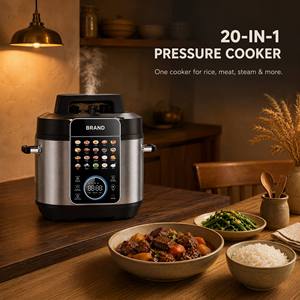
Includes both food-grade stainless steel and non-stick ceramic inner pots. Smart touch panel tailored for versatility in Italian household kitchens.
Inquire Now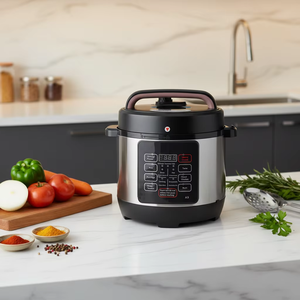
Sleek metallic exterior housing a high-pressure heating matrix. Ideal for quick rice prep, risotto base reduction, and stews in hospitality venues.
Inquire Now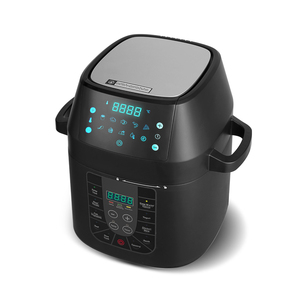
Compact cylindrical body designed for European aesthetic preferences. Optimized thermal retention reduces energy consumption during prolonged simmering.
Inquire Now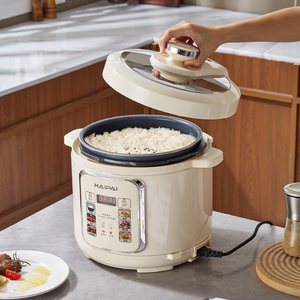
Versatile domestic unit combining atmospheric cooking with micro-pressure speed. Custom user interface available in Italian, English, and German.
Inquire Now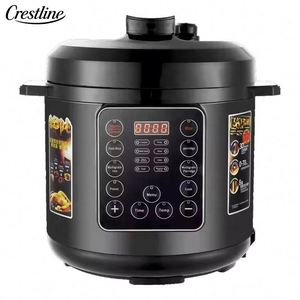
Features ultra-thick heating element plates and double-shielded pressure release safety valves. High thermal efficiency reduces operational electric costs.
Inquire NowItaly maintains one of the world's most sophisticated culinary industries, supported by strict health and safety standards. For B2B importers, commercial buyers, and brand owners sourcing stainless steel cookware from overseas factories, meeting local regulatory benchmarks—specifically MOCA (Materiali e Oggetti a Contatto con gli Alimenti) compliance and Italian Ministerial Decree 21/03/1973—is mandatory.
As an OEM/ODM manufacturing partner with over four decades of metallurgical experience, our production line adheres to international stainless steel metallurgy protocols. We specialize in transforming raw food-grade alloys into high-durability kitchen equipment designed to withstand thermal cycles, high salinity, and organic acids typical of Mediterranean cooking.
To ensure long-term durability without pitting corrosion, our factory utilizes high-grade austenitic and ferritic stainless steel compositions. Below is a technical breakdown of raw materials used in our Italian cookware supply chain:
| Steel Grade / Standard | Composition (Cr / Ni) | Corrosion Resistance | Induction Compatibility | Italian Compliance Standard |
|---|---|---|---|---|
| AISI 304 (EN 1.4301) | 18% Cr / 8-10% Ni | Very High (Acid Resistant) | Requires Magnetic Base Plate | DM 21/03/1973 Compliant |
| AISI 316 (EN 1.4401) | 16% Cr / 10% Ni / 2% Mo | Ultra-High (Saline Resistant) | Requires Magnetic Base Plate | Medical/Pharma & Premium Food |
| AISI 430 (EN 1.4016) | 16-18% Cr / 0% Ni | Moderate (Dry Environment) | 100% Native Induction | Outer Encapsulated Base |
| 3-Ply Clad (304-Alu-430) | Multi-Layer Compound | Maximum Interior & Thermal | Universal (Induction + Gas) | Full EU / MOCA Certified |
Under EU Regulation EC 1935/2004 and Italian health regulations, stainless steel cookware must undergo strict migration testing for Nickel (Ni), Chromium (Cr), and Manganese (Mn) using 3% acetic acid simulant solutions at 100°C for 24 hours. Our factory products consistently test below 0.05 mg/kg for Nickel and Chromium, well under the statutory limit of 0.1 mg/kg.
Modern Italian residential kitchens and commercial HORECA establishments rely heavily on induction cooktops (such as those from Smeg, Zanussi, and Miele). Traditional single-layer stainless steel suffers from poor thermal conductivity. To resolve this, our factory employs High-Tonnage Friction Impact Bonding.
By pressing an aluminum core between an inner layer of food-grade AISI 304 stainless steel and an outer layer of magnetic AISI 430 stainless steel under 2,500 tons of hydraulic pressure, we eliminate internal air gaps. This achieves an even thermal diffusivity rate, preventing hot spots during slow sauce reductions, risotto preparation, or high-pressure stewing.
Zero encapsulated air pockets ensure 100% flat bottom geometry, preventing base warping even under severe heat cycling in commercial kitchens.
Micro-smooth interior surfaces eliminate microscopic pores where bacteria or salt deposits can accumulate, streamlining cleaning and sanitation.
Electric pressure cookers feature automated lid interlocks, secondary pressure release valves, and over-temperature cutoffs compliant with CE EN 60335 standards.
Understanding regional food dynamics in Italy allows us to tailor OEM specifications for specific market segments. Our product lines cater to three primary commercial and domestic environments across Italy:
In high-pace hospitality centers such as Milan, Turin, and Venice, commercial kitchens require fast batch-cooking appliances. Our large-capacity electric micro-pressure cookers (10L–30L) serve as essential tools for preparing foundations like brodo di carne (meat broth), polenta base, and braised meats (ossobuco). Stainless steel AISI 304 construction prevents flavor transference between distinct dishes while speeding up cooking cycles by up to 70% compared to open-pot boiling, significantly lowering natural gas and electricity usage.
Italian cooking frequently incorporates high-acid ingredients, including San Marzano tomato purees, balsamic reductions, and wine-infused braises. Standard low-grade stainless steel cookware often reacts with acid solutions (pH 3.5–4.5), imparting a metallic taste and causing pitting corrosion over time. Our specialized electropolished AISI 304 and 316 inner pots guarantee chemical stability, preserving the natural taste and nutritional integrity of tomato-based dishes without metal leaching.
Italian consumers are increasingly focused on energy efficiency due to elevated domestic utility prices. Our smart digital pressure cookers and tri-ply induction cookware allow urban households to prepare traditional slow-cooked recipes (like Ragù alla Bolognese or legume soups) in a fraction of the time. Integrated microprocessors monitor pressure levels (50–90 kPa) to optimize energy draw, consuming up to 60% less kilowatt-hours than conventional electric ovens or open gas ranges.
As the European Union tightens environmental directives, Italian kitchenware importers must adjust to evolving consumer expectations and legislative requirements:
Rooted in four decades of manufacturing heritage (formerly Khaitan Pressure Cookers Pvt Ltd / Shyam Cookware lineage), our production facilities combine traditional metalworking expertise with modern automated technology. We specialize in turn-key OEM/ODM supply chains for European importers.
Custom deep-drawing mold designs, lid geometry adaptations, laser logo engraving, and localized Italian control panel printing.
Every electric pressure cooker undergoes high-voltage insulation tests, 100% pneumatic pressure testing, and thermal safety cut-off checks before packaging.
Experienced in containerized export shipping to major Italian ports: Genoa (Genova), La Spezia, Trieste, and Naples (Napoli). Support for DDP and FOB terms.