
Call: +91-9830320177
Dealer Enquiry
Engineered for continuous commercial operation, high thermal uniformity, and rigorous sanitation standards in high-volume food production environments.
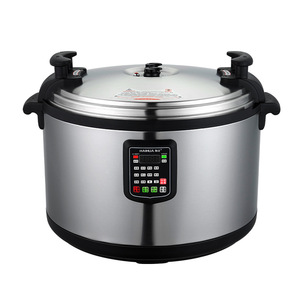
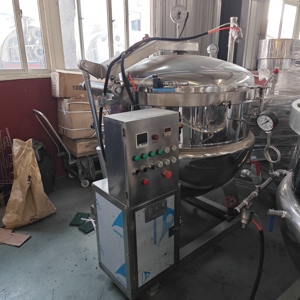
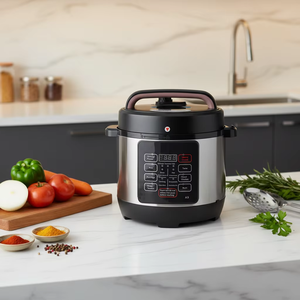
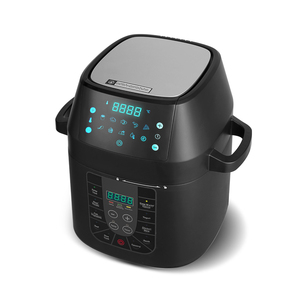
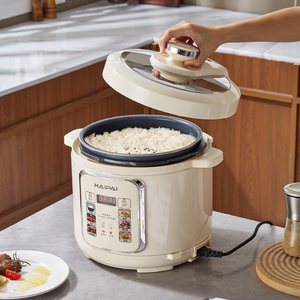
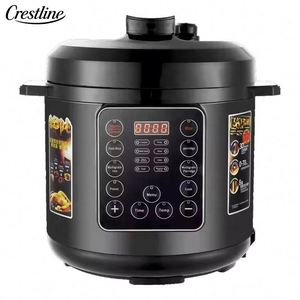
In the highly demanding commercial food service landscape of Japan, kitchen equipment is subjected to operational stress far exceeding standard commercial benchmarks. From long-hour Tonkotsu broth reduction requiring uninterrupted 14-hour thermal transfer to delicate Dashi extraction where localized hot spots degrade delicate umami compounds, Tri-Ply Stainless Steel Stock Pots represent the definitive technological evolution over traditional single-ply stainless and cast aluminum vessels.
This B2B Procurement Whitepaper evaluates the metallurgical engineering, manufacturing standards (JIS G4305 compliance), thermal efficiency metrics, and supply chain logistics involved when sourcing commercial-grade tri-ply stock pots for distribution across Tokyo, Osaka, Nagoya, Fukuoka, and regional Japanese food service networks.
Single-ply stainless steel pots suffer from inherently low thermal conductivity (approx. 15 W/m·K for SUS304), leading to severe localized scorching during thick broth reduction. Conversely, unclad aluminum stock pots present chemical reactivity concerns when exposed to highly acidic or saline ingredients common in Japanese cuisine, such as soy sauce (Shoyu), fermented miso, and vinegar-based stocks.
Our OEM manufacturing process utilizes a bonded 3-ply molecular composite engineered to balance structural integrity, corrosion resistance, and ultra-fast heat dispersion:
By encapsulating pure aluminum across the entire vessel—not just a impact-bonded disc base—tri-ply stock pots eliminate the "heat ring boundary" thermal gradient. Heat rises uniformly along the vessel walls, reducing thermal stress on bottom welds by 68% and preventing bottom-burn in viscous broths.
Commercial stock pots destined for the Japanese market must perform reliably across distinct culinary and industrial workflows. Below are the key localized application scenarios driving B2B demand across Japanese prefectures:
Ramen specialty shops in Fukuoka and Tokyo require uninterrupted 12-to-18-hour continuous boiling to emulsify pork lipids and marrow. Tri-ply stock pots prevent bottom charring, preserving the milky white texture and clean aroma of the broth.
Traditional Ryokan and Kaiseki establishments in Kyoto demand exact thermal control between 60°C and 80°C for extracting glutamic acids from Kombu (kelp) and Katsuobushi (bonito flakes). Multi-clad walls retain stable water temperatures without rapid fluctuation.
Industrial catering providers and Bento chain central kitchens operating massive 50L to 100L stock pot arrays benefit from rapid boil-up times, cutting batch boiling times by up to 22% compared to standard disc-bottom pots.
The Japanese commercial kitchenware market is undergoing a structural shift driven by rising commercial energy prices, labor shortages, and strict municipal hygiene standards. Key trends shaping procurement decisions include:
The following technical evaluation highlights why global importers serving Japanese distributors are transitioning away from legacy single-layer kitchenware:
| Performance Metric | Tri-Ply Clad Stainless Steel | Single-Ply SUS304 (Disc Base) | Commercial Cast Aluminum |
|---|---|---|---|
| Thermal Conductivity (Base & Wall) | Uniform (200+ W/m·K Core) | Uneven (Wall is only 15 W/m·K) | High (160-200 W/m·K) |
| 200V Commercial IH Efficiency | 94% Energy Coupling | 78-85% (Disc Separation Risk) | 0% (Non-Magnetic unless plated) |
| Acid & Salt Corrosion Resistance | Exceptional (SUS304 Interior) | High (SUS304) | Low (Leaches under acid/saline) |
| Anti-Warping Base Stability | Zero Deflection (< 0.2mm) | Moderate (Base disc may detach) | Poor (Warps under rapid cooling) |
| HACCP Sanitation Rating | Class A (Non-reactive/Seamless) | Class B (Crevices around disc) | Class C (Porous metal surface) |
Rooted in over four decades of precision metalware manufacturing, Khaitan Pressure Cookers Pvt Ltd (Shyam Cookware - Established 1985) combines heavy industrial stamping capabilities with state-of-the-art multi-layer cladding technology. Operating with ISO-certified quality assurance and strict adherence to international safety metrics, our facility supplies high-volume distributors across East Asia and Japan.
High-pressure hydro-forming and friction bonding lines eliminate micro-air gaps between clad layers for guaranteed thermal transfer efficiency.
Every coil batch of SUS304 and SUS430 undergoes chemical analysis to verify nickel and chromium content before entering production lines.
Custom laser-etched capacity scale markings (Liters/Quarts), custom handle configurations, and export-ready barcode master carton packaging.
Below are targeted answers to technical and logistical questions frequently raised by Japanese kitchenware importers, hardware wholesalers, and commercial equipment buyers:
Yes. All food-contact internal surfaces are crafted from certified SUS304 (18-8) stainless steel. Our pots pass heavy metal migration and chemical leach testing required by Japanese quarantine inspections at major import ports like Tokyo and Yokohama.
Our heavy-duty commercial stock pots feature a total wall/bottom clad thickness ranging from 2.5mm to 3.5mm (0.5mm SUS304 + 1.5-2.2mm Al + 0.5mm SUS430). This structural mass withstands rapid thermal cycles without bottom concavity deflection.
Absolutely. We offer OEM production for standard sizes (15L, 20L, 30L, 45L, 60L, up to 100L heavy stock pots) with custom height-to-diameter aspect ratios suited for tight Japanese commercial kitchen layouts.
Production lead times average 25 to 35 days post-sample approval. Transit times via ocean container routes to Kobe, Osaka, Tokyo, or Yokohama ports typically range from 14 to 20 days depending on shipping lines.
We supply heavy-duty solid stainless steel handles secured with 4-point thick aircraft-grade stainless rivets. For specialized sanitary orders, continuous TIG welded handles with zero internal rivet heads are also available.
Standard factory stock pots carry an MOQ of 200 units per size. Custom laser etching and Japanese language master carton printing require an MOQ of 500 units per item SKU.
Expand your distribution network across Japan with factory-direct sourcing, rigorous metallurgical quality guarantees, and tailored OEM solutions. Request our full commercial catalog and technical spec sheets today.